


"The art is dealing with waking up!"
I’m tired; I’m going to bed. For many people, that’s easier said than done. According to a study, one in three people in Germany suffers from sleep disorders. But what could be the reasons for restless nights—and what can be done about it? We discuss this with Dr. Margret Fischer, a systemic coach at pme Familienservice.
Expert: Dr. Margret Fischer, systemic coach | Editor: Sabrina Ludwig
If you have trouble falling asleep or staying asleep, it doesn't necessarily mean you have a sleep disorder. But it's worth taking a closer look. Read on to find out what might be causing your restless nights, when poor sleep becomes a problem, and what can help you fall asleep and stay asleep more easily.
Read more in this article:
- At what point does it become a sleep disorder?
- When am I “up too early”?
- Reasons for Waking Up Too Early
- Sleep Problems and Perimenopause
- Poor Sleep Over Time
- What makes for a good night's sleep?
- How important are regular sleeping times?
- Does melatonin really help?
- Sleep Trends: How Helpful Are They?
- Tips for Healthy Sleep (Download Sleep Diary)
- Tips for Falling Asleep More Easily
- Are sleep problems on the rise?
- Recent Studies on Sleep
Taking a long time to fall asleep, waking up multiple times or too early, restless legs: Insomnia has many forms. At what point does it become a sleep disorder?
Dr. Margret Fischer: People aren’t machines, and after a strenuous day or during a stressful period in life, it’s completely normal for sleep quality to suffer temporarily. The brain processes the day’s experiences even while we sleep. A few restless nights don’t necessarily mean you have a sleep disorder.
However, it is essential that the diagnosis be made by a medical professional. This will help determine whether physical or psychological factors are involved and which treatment is appropriate.
Restless Legs Syndrome is not simply a form of insomnia. The urge to move and the unpleasant sensations in the legs can disrupt sleep, but even that should be evaluated by a doctor.
Chronic insomnia is generally defined as symptoms occurring on at least three nights per week for at least three months, accompanied by significant distress. (Source: AWMF)
What does “waking up too early” actually mean?
It's not just the time on the clock that tells me whether I woke up too early. But if I wake up before my usual wake-up time for days on end and drag myself through the day feeling sluggish and tired, then it's probably "too early."
If you occasionally wake up early but still feel refreshed and well-rested, that doesn't necessarily mean you have a sleep disorder. What matters is how often it happens and whether you feel good and energetic in your daily life.
What could be the reasons why I keep waking up way too early in the morning?
There can be various reasons for repeatedly waking up early:
- For example, a sleep-wake cycle that has shifted forward by about one,
- Stress and worrying,
- Pain,
- certain medications,
- Alcohol,
- psychological stress or other health factors,
- Snoring and pauses in breathing can also interrupt sleep.
However, waking up early on its own is not a cause for concern and should not be hastily attributed to a single cause.
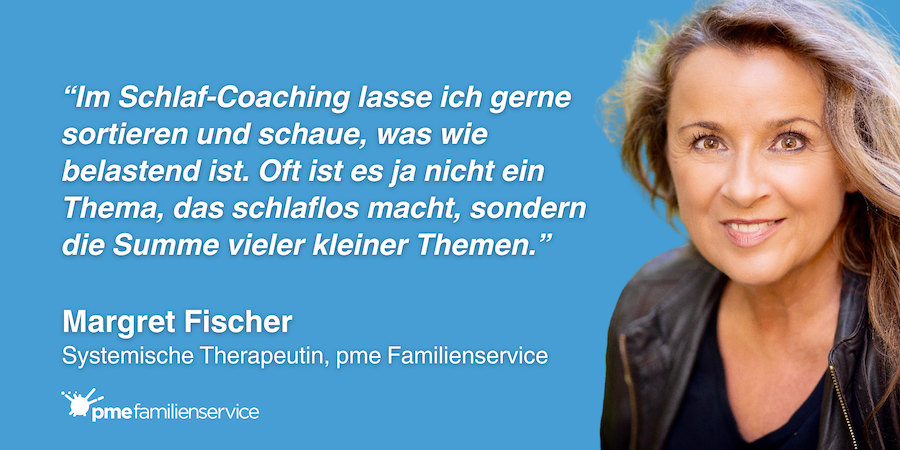
In sleep coaching, I like to help people sort things out and see what’s currently causing them stress and how they’re living—alone, as a couple, or with family. How is their resilience? Do they have any health issues? What kind of work do they do? Often, it’s not just one issue that’s causing sleeplessness, but the accumulation of many small issues. In the next step of the coaching process, we look at what can be easily influenced and therefore easily changed.
Be sure to read this article: 5 Tips for Getting Through the Day on Little Sleep
Can sleep problems be a symptom of perimenopause?
Hot flashes and night sweats during perimenopause can wake you up. Mood, stress, and other changes can also affect sleep due to hormonal changes.
But as I said before: If the symptoms persist, it’s worth talking to your family doctor or gynecologist to find the right treatment.
What happens physically and mentally if I sleep badly for a long time?
The body can no longer rest, and important regenerative processes can no longer be completed, both mentally and physically.
Feeling “worn out” every now and then after a bad night’s sleep becomes a constant state. This can lead to problems with concentration—and in the worst-case scenario, even to accidents on the road or at work. In addition, the potential for aggression increases because the body is consistently deprived of the essential rest it needs at night.
Be sure to check out our podcast, too:
This letscast.fm content can only be loaded if you accept the privacy policy of letscast.fm.
To the data protection settings "What makes for a good night's sleep?
A good night's sleep isn't defined by going to bed every night and then sleeping soundly for eight hours without waking up. Everyone has different needs. Some people need six hours, others eight, to feel refreshed in the morning.
Waking up at night was also a deliberate part of our evolution; after all, our ancestors would use those moments to check that everything was still all right within the clan.
The trick is knowing how to handle waking up. You shouldn't put too much pressure on yourself to fall right back asleep. A good night's sleep is one that lets me go to work without feeling, while I'm on the streetcar or riding my bike, that I absolutely have to get back into bed because I'm so tired.
How important are regular sleeping times?
A regular sleep schedule can help support your body's internal clock. However, that doesn't mean I absolutely have to go to bed and wake up at the same time every day.
- But it helps to set aside enough time for sleep and to plan a daily routine that includes light and exercise.
- Especially in winter, it’s worth takinga morning walk to soak up some sunlight and signal to your body: “Here we go—the day is beginning.” This stops the production of the sleep hormone melatonin and triggers the release of serotonin, the “feel-good” hormone.
- If you have trouble getting out of bed in the morning during the winter, an alarm clock with a daylight feature can help gently wake your body up in the morning.
Does melatonin really help you fall asleep and stay asleep?
Melatonin is not a general sleep aid that helps with sleep problems. The updated S3 guideline (the highest quality level for medical guidelines in Germany) recommends short-term use for certain adults aged 55 and older, because melatonin production declines at that age.
Anyone who wants to take melatonin for an extended period should consult with their family doctor.
There are quite a few sleep trends out there: Which ones actually work?
It really depends, I'd say.
Sleep apps, rings, and watches can help you track your sleep routine. But the data is only an estimate and should be taken with a grain of salt. If tracking your sleep causes you stress, I’d advise against it anyway.
Exercises such as the 4-7-8 breathing exercise or progressive muscle relaxation can help gently wind down your body and mind.
Basically, everyone has to figure out for themselves what helps them fall asleep more easily. However, I advise against trends that offer no proven benefits, such as mouth taping.
Also: In cases of long-term sleep disturbances, sleep hygiene alone is often not enough. In such cases, it is advisable to visit a sleep lab or work on the underlying causes and reasons through therapy.
Stress, mental load, online yoga, or progressive muscle relaxation: Find the right event to help you achieve balance in your daily life and at work.
Do you have any tips on how to get back to a healthy sleep?
A first step is to look at your own habits with curiosity rather than judgment:
1. Keep a sleep diary
For one to two weeks, keep track of when you go to bed and wake up, how often you wake up during the night, and how you feel during the day. If needed, you can also include caffeine, alcohol, medications, stress, and your period/PMS in your sleep diary. Keeping a diary can help you identify habits and patterns.
2. Find a suitable evening routine or bedtime ritual
Drinking a cup of tea or reading a book every evening before going to bed can signal to your body that it's almost time for bed.
3. Schedule time away from smartphones and screens
If the news, work, or social media are stressing you out or pushing back your bedtime, try going screen-free for a while before bed.
4. Journaling
Writing down things that are on our minds or important tasks for the next day can help us let go and fall asleep more easily.
5. Daylight and Exercise in the Morning
Morning sunlight, exercise, and a daily routine that is as regular as possible can help support your sleep-wake cycle.
6. Monitor caffeine and alcohol intake
Caffeine can keep you awake for a long time. Although alcohol sometimes makes you drowsy at first, it can disrupt your sleep later on.
7. Make the bedroom cozy
Make the room as quiet, dark, and comfortably warm as possible. Keep smartphones, books, and the TV out of the bedroom. Keyword: sleep hygiene.
8. If the patient remains awake, relieve the pressure
Don't stare at the clock, and don't force yourself to fall asleep right away. If you've been lying awake for more than 10 minutes, it's best to get up, do something else for a short while in dim light (no smartphones!), and go back to bed when you feel sleepy.
Are sleep problems in Germany increasing year by year?
The latest RKI data show that sleep problems are widespread and that difficulties falling asleep and staying asleep continue to increase. Surveys indicate that sleep problems are multifactorial and are perceived very differently by those affected.
In our counseling sessions, we see that many people are under a great deal of stress. Increased workloads, shift work, the need to be constantly available, worries, and high expectations of oneself can make it difficult to unwind. Added to this are physical and mental health issues, pain, medications, and changes in daily life. It therefore makes sense to look beyond just individual habits. Working conditions, noise, heat, and other stressors can also affect sleep.
Using a smartphone or laptop in the evening can make it difficult for some people to fall asleep. News, work, or social media can be stimulating and thus push bedtime later. The device itself isn’t automatically the cause of every sleep problem. Rather than imposing blanket bans, it’s more helpful to observe your own evening routine and figure out what’s keeping you awake.
The RKI panel (2024) “Health in Germany” shows that 16.3 percent of adults have trouble falling asleep, and 31.7 percent have trouble staying asleep. These figures are based on subjective self-reports and do not represent a diagnosis of insomnia.
In the UK Biobank observational study using wearables (2026) , physical activity data from 95,559 adults were analyzed; the participants wore a sensor on their wrist for seven days. Health data were then tracked over a median period of 8.9 years. The study found that sleeping less than five hours per night was associated with a higher risk of 37 diseases examined.
For those who slept six to eight hours, the risks of many diseases were significantly lower. These findings merely report associations. This does not imply that sleep duration alone could have caused these diseases. Nor are these results intended to serve as target values.
The pme Familienservice Group is one of the largest providers of EAP (Employee Assistance Programs) consulting and family services in the German-speaking world.
For over 30 years, we have been helping employees and executives balance their professional and personal lives—in complete confidence and 365 days a year.
With the Work:Life Academy for executives and employees, as well as the Mindance app, we provide a comprehensive EAP program—for better mental health, a better work-life balance, and more productive teams and leaders.
You can find out more about the pme Familienservice Group here.

 Teachers at childcare center Blütenallee in Darmstadt have been using the app since January 2017. Thanks to the app, parents receive a lot of information during the day, leaving more time to talk about more important matters such as the child's development when picking up the children. "We save time as a whole team thanks to the digital documentation, which benefits both the children and the parents," says head of childcare Katrin Kob. "Thanks to the childcare center app, we spend less time on everyday things such as meals and bedtimes and are better able to discuss what the child has experienced and how they have been throughout the day."