
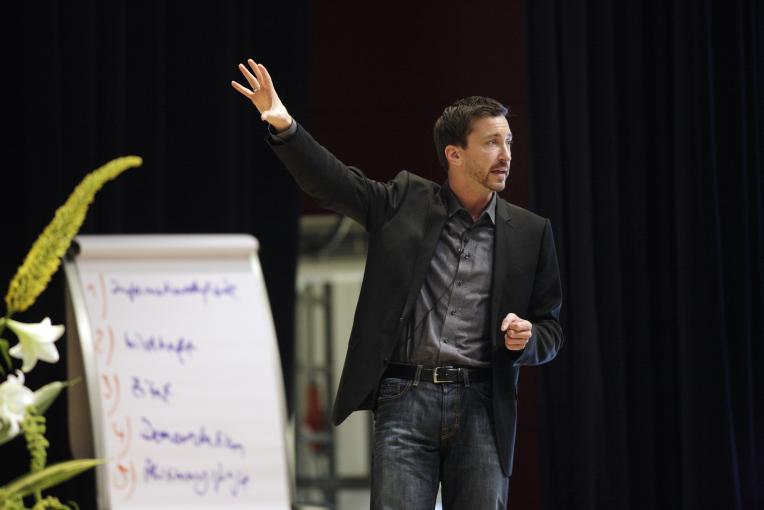
Why does the topic of respect strike a nerve?
René Borbonus: I think there are two main reasons. Firstly, people miss respect, especially in the workplace. Everyone longs for it. So respect is simply a basic need in communication. Secondly, there is an interesting gap between theory and practice: respect is written into company mission statements and is demanded everywhere. But hardly anyone knows how to put this demand into practice. Many people want to have this attitude. But how do I put it into practice? What does respect mean for my company? How can I communicate it?
What led you to deal with the topic of respect?
In surveys about what people miss in their everyday or professional lives, keywords such as appreciation, recognition and respect come up extremely often. And always very high up, if not right at the top. That's when I started to look more closely at the topic and asked myself why this might be. Why do we always feel there is too little respect in the world, even though it is obviously so important to us? And what can we do to avoid appearing disrespectful to others ourselves?
Why do people behave disrespectfully?
First of all, in most cases we are not disrespectful on purpose, but by accident. In everyday life, there are two challenges that often lead to disrespect. We can work on both of them.
Firstly, remain calm when we are confronted with disrespect. You don't have to get upset about everything that is suitable. Secondly, we can differentiate between attitude and technique. For example, we can also address disrespect without leaving scorched earth in our wake.
If I start to show respect in communication, I will get it back in most cases, because people mirror each other.
How do you gain respect?
Basically, the best way to gain respect is to treat others with respect. Respectful communication is therefore a give and take: If you bring respect into the world, you will get it back. That is my firm conviction.
There are two types of respect: we can earn so-called vertical respect through performance. I am more concerned with horizontal respect. It presupposes that we regard all people as fundamentally equal.
Is our society losing more and more respect?
I don't think it will be lost, but there are new challenges. We are dealing with new means of communication and media that sometimes encourage disrespect. This happens because we communicate very quickly or anonymously. We have to learn to deal with this.
Is disrespect a feature of the modern working world?
We are often unintentionally disrespectful in the workplace. I don't believe that managers maliciously and intentionally hurt their employees. It can certainly happen, but most of the time we are disrespectful by accident.
How do you gain respect and recognition in everyday working life?
Everyday working life is fast-paced and stressful. Where many people and many projects intersect, a lot naturally happens. Communication often takes place between door and door. The faster communication is, the easier it is for disrespect to creep in. It helps to develop mindfulness: to consciously think about our own communication and also talk about talking. This sensitizes us to the fact that we are sometimes unintentionally disrespectful.
What are the benefits of a culture of respect in the company?
When respect is a core value in the company, people are more motivated to work. Emotional loyalty increases, and with it employee satisfaction. And these are not just empty words. This is the prerequisite for the right output. Respectful communication has also been proven to make people healthier. It's like this: Employees can only show to the outside world what is nurtured and encouraged from within. They are expected to treat customers with respect as a matter of course.
However, this can only succeed if they themselves are respected. If the company is imbued with respect, this also has an impact on results. Respect demonstrably makes companies more productive because it makes people more productive.
Aren't particularly successful people, e.g. top managers, often disrespectful towards others?
You can't lump everyone together. There are such and such everywhere. Of course there are managers who want to get to the top and are egotistical in their approach or even have to be. But I know at least as many managers who make every effort to treat others with respect. Perhaps they are more likely to come to me because they are specifically addressing the issue. But experience teaches us that if we are clear on the matter and respectful towards people, then we will have the best output and the greatest success. We automatically expect people who take the lead to have social intelligence. And those who use it get further. I am firmly convinced of that.
Does disrespectful behavior on the Internet and social media have an impact on society in general?
We can assume that. We sometimes see very heated arguments on social media. The anonymity encourages this. And if we spend a lot of time in this environment, sooner or later it will affect our behavior. Perhaps even on our attitude. What's more, we often communicate on social media in the heat of the moment, i.e. very quickly and emotionally. As a result, the statements we make there are often unreflected.
We used to write a letter instead. We then had to take it to the letterbox first. So a lot of time passed between the initial reaction and the response. We often changed our minds. This filter is missing today. Affect communication is often not very respectful.
What can individuals do to make things more respectful in a company or group?
Be a role model! If a manager is not reliable, they cannot expect their employees to be reliable. The same applies to respect. If one person leads by example, there is a very good chance that respect will permeate the entire company.
About René Borbonus:
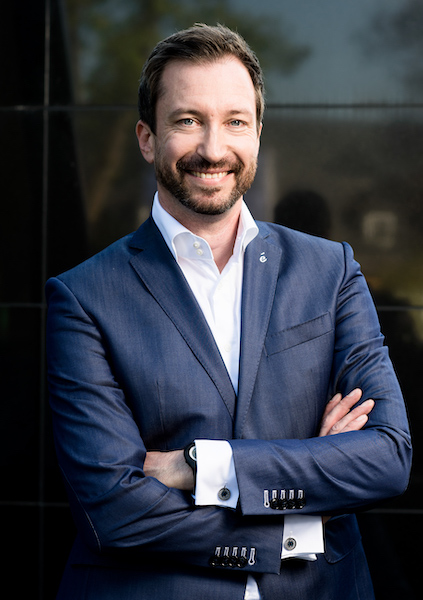
"Thou shalt not bore!": René Borbonus has made this commandment by Billy Wilder his leitmotif. He has been studying the rules of persuasive communication since his training.
He studied humanities and quickly gained rhetorical practice as a presenter and speechwriter. Today, René Borbonus is a sought-after speaker and is regarded as one of the best rhetoricians in the German language. As a speaker, trainer and author, he teaches the theory and practice of successful communication.
Experience exciting presentations in our livestreams!
This YouTube content can only be loaded if you accept the privacy policy of Google LLC.
To the data protection settings "