20.02.2026
  Isabel Hempel
  33216
33216
Which working environment supports neurodivergent people?
In a working world that is often designed for a "standard operating system", the talents of people with autism, high sensitivity, ADHD or dyslexia are easily overlooked. However, jobs and application procedures can be designed without great effort in such a way that different ways of thinking are not only tolerated, but specifically encouraged. Small changes often have a big impact for neurodivergent employees and represent a benefit for the entire company.
We all have days when the noise in the office robs us of concentration or a vague instruction causes confusion. For neurodivergent people, however, this is not an occasional annoyance, but a major hurdle on a daily basis. This is because people on the autism spectrum, with ADHD or dyslexia process information differently - not better or worse, but simply differently.
"Neurodivergent people perceive information in their very own way and process it differently - this is a natural diversity that we should take into account in everyday working life," says Carline Krügl, systemic consultant at pme Familienservice. She has been working intensively with ADHD/ADS and the neurodivergent spectrum since her studies and supports companies and those affected in their working lives.
"During my professional career, I became more and more aware of what neurodivergence can be - namely people with giftedness, high sensitivity, autism, ADHD, dyslexia or other neurological characteristics," adds Krügl.
However, our working world is mostly unconsciously designed for neurotypical brains. The unique strengths of neurodivergent talents, such as deep concentration, exceptional creativity or impressive pattern recognition, often remain untapped. Why is this the case? And how can we create a work culture in which everyone can develop their full potential and the entire team benefits?
What do neurodiversity and neurodivergence mean?
First, let's clarify the terms: neurodiversity and neurodivergence . The terms sound similar and are often used interchangeably, but they represent two fundamentally different ideas: Neurodiversity is the concept that describes the overall, natural diversity of human brains in our society - a diversity as valuable as that of a rich ecosystem.
This idea was coined in the late 1990s by sociologist Judy Singer, who wanted to take neurological differences such as autism or ADHD out of the "disease corner" and establish them as a natural variation of being human.
But what do you call a person whose brain deviates from the social norm - i.e. from the neurotypical "standard"? This is where the term neurodivergence comes into play. It was created by the activist Kassiane Asasumasu, herself autistic and a person of color. From her perspective, it was crucial to have a word for those people whose experiences are often overlooked. The term "neurodivergent" should enable them to talk about the individual experiences they have due to their special perception.
So, an individual may be neurodivergent (e.g., autistic or have ADHD), while humanity as a whole is neurodiverse. At its core, both women wanted to make it clear that neurological deviations from the norm are not a deficit, but rather a different way of perceiving and processing information:
"Especially in the workplace, neurodivergent people can demonstrate significant strengths when their specific needs are taken into account. Neurodiversity recognizes these differences as valuable and emphasizes the need for inclusion and understanding in everyday life—particularly in the workplace," says Johannes Junker, coach and former Head of Communications at the INQUA Institute (INQUA Neurodiversity in the Workplace: A Guide).
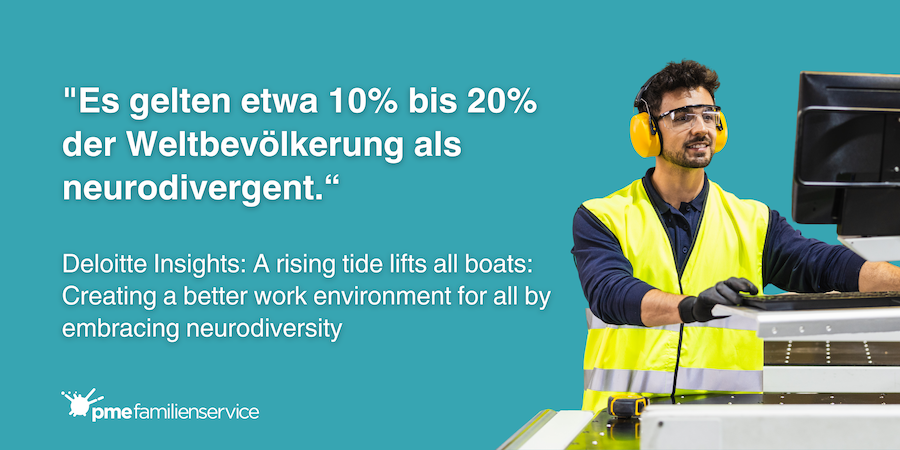
"Many business leaders have spoken openly about being neurodivergent, but more commitment is needed in this area. John Chambers, the former CEO of Cisco, says: '25% of CEOs are dyslexic, but many don’t want to talk about it.' "If executives come forward as neurodivergent, the rest of the workforce would also feel comfortable stepping forward."(Deloitte Insights, A rising tide lifts all boats: Creating a better work environment for all by embracing neurodiversity)
An overview: What forms of neurodivergence are there?
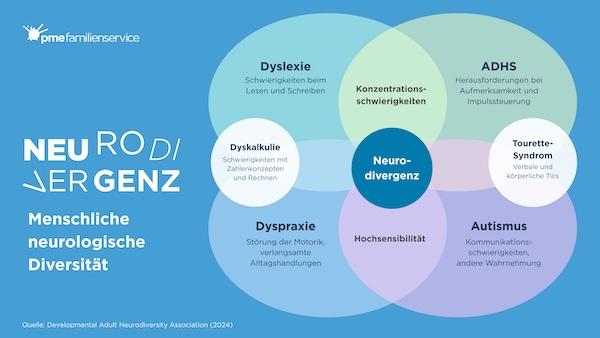
Neurodivergence is a broad term that encompasses a variety of neurological profiles. Here are some of the best known spectra:
Autism spectrum (ASD)
ASD describes a different type of information processing and perception. Typical characteristics are differences in social communication, intense interests (often called "special interests"), a strong need for routines and an increased or decreased sensitivity to sensory stimuli (such as sounds, light or touch).
Attention deficit hyperactivity disorder (ADHD)
This is a different functioning of the executive functions in the brain, which affects attention control and impulse control. This can manifest itself in the form of difficulty concentrating on routine activities, but also as the ability to "hyperfocus" on interesting topics.
Dyslexia (dyslexia)
Dyslexia is a specific learning difficulty affecting reading, writing and word recognition that has nothing to do with intelligence. People with dyslexia often have strengths in creative, conceptual and three-dimensional thinking.
Dyscalculia (Dyscalculia)
Dyscalculia is often referred to as the "mathematical counterpart" to dyslexia. It is a specific difficulty in understanding numbers, quantities and mathematical concepts.
Dyspraxia
Dyspraxia is also known as a developmental coordination disorder. It affects motor skills, specifically the planning and execution of movements. This can manifest in fine motor skills (e.g., writing) or in gross motor skills.
Tourette syndrome
Tourette syndrome is a neurological condition characterized by involuntary, repetitive movements and vocalizations, known as tics. Its severity can vary from very mild to severe.
High sensitivity (High Sensitivity)
Highly sensitive people perceive stimuli from their environment more intensely and in a more differentiated way than others. They often react more sensitively to sounds, light, smells or moods and process impressions more deeply. This can lead to being overwhelmed more quickly, but is often accompanied by a pronounced empathy, creativity and a special ability to perceive details. (High sensitivity is not a diagnosis, but a personality trait that affects around 15-20% of the population).
Important: This list is not exhaustive, and many neurodivergent people have characteristics from more than one of these spectrums. Neurodivergence itself is a spectrum, and no two people have exactly the same experiences.
The "superpowers": What strengths do neurodivergent people bring to the table?
Instead of asking themselves which deficits need to be compensated for, companies can ask themselves a much more exciting question: What unique skills and perspectives do neurodivergent employees bring to a team? Because if the working conditions are adapted, neurodivergence can often turn out to be a "superpower" with enormous added value.
1. Strengths on the autism spectrum: precision and depth
People on the autism spectrum are often characterized by an intense and detail-oriented way of thinking. This makes them invaluable talents in many areas:
- Strong ability to concentrate (deep work): While others are thrown off track by constant interruptions, many people on the autism spectrum can immerse themselves deeply in a complex task for hours at a time. This ability to engage in “deep work” is invaluable in today’s workplace, particularly in the fields of IT, data analysis, and research.
- Exceptional pattern recognition: People with autism often have a talent for identifying patterns, connections, and errors that others overlook. This makes them excellent employees in quality assurance, software debugging, or the analysis of complex datasets.
- Attention to detail and honesty: A high degree of conscientiousness and a strong sense of justice often result in extremely precise work and direct, honest communication. You can rely on the results produced by people on the autism spectrum, and their feedback is clear, transparent, and free of office politics.
2. The Superpowers of ADHD: Creativity and Resilience
The brains of people with ADHD are often on the lookout for new stimuli and think in quick, non-linear jumps. What is still often considered a "disruptive factor" in the school system (in many places, schools also need to learn to rethink and strengthen strengths instead of focusing on weaknesses) becomes a driving force for innovation in the professional environment:
- Enormous creativity and ingenuity: People with ADHD are often masters at making unconventional connections between ideas. This makes them natural innovators in brainstorming sessions, marketing, or product development.
- Ability to hyperfocus: Even though concentrating on routine tasks can be extremely difficult, when a topic piques their interest, people with ADHD can enter a state of extreme concentration known as “hyperfocus.” During this phase, they can quickly delve deeply into a subject and achieve outstanding results.
- A knack for improvisation and a knack for handling crises: When plans fall through and chaos ensues, many people with ADHD really come into their own. Their ability to think on their feet and adapt to new situations makes them valuable crisis managers and problem-solvers.
3. The Strengths of Dyslexia & Co.: Holistic Thinking and Empathy
People with dyslexia or dyscalculia often have difficulties with the linear processing of symbols such as letters or numbers. To compensate for this, their brains often develop remarkable alternative abilities:
- Strengths in three-dimensional and conceptual thinking: Many people with dyslexia are exceptionally good at visualizing complex systems in space. This makes them talented in fields such as architecture, engineering, design, or surgery.
- Holistic problem-solving (“big-picture thinking”): Instead of getting bogged down in details, they often see the big picture and recognize broader connections. They are the ideal strategists who keep their eyes on the goal while others are still analyzing the individual steps.
- High levels of empathy and narrative skills: Since they cannot rely solely on the written word, many develop a keen sense for nonverbal cues and the moods of others. They are often excellent storytellers and can convey complex ideas in a clear and engaging way.
4. The Strengths of High Sensitivity: Empathy and Foresight
Highly sensitive people (HSP) perceive sensory stimuli and moods more intensely and process them more deeply. This sensitivity is a particular strength in working life:
- High empathy and social awareness: Highly sensitive individuals often serve as the social conscience of a team. They sense tensions early on, understand their colleagues’ needs, and foster a harmonious working environment. Their emotional intelligence is invaluable in leadership roles and in customer service.
- An eye for detail and nuance: Nothing escapes their notice. They spot the slightest changes, potential sources of error, or subtle opportunities long before others do. This makes them excellent analysts, consultants, and quality managers.
- Conscientiousness and thoughtful decision-making: Because they process information thoroughly, they often make particularly well-considered and sustainable decisions. Their work is characterized by high quality and a strong sense of responsibility.
"Neurodiverse employees bring unique skills and perspectives to their work that are invaluable across various industries. (…) Furthermore, many neurodiverse individuals demonstrate a high degree of adaptability and social intelligence, making them valuable team members in dynamic work environments and professions involving intensive interpersonal interactions," says Coach Johannes Junker (INQUA Neurodiversity in the Workplace: A Guide).
5 Common Obstacles: Why the Standard Workplace Often Doesn't Work
In order to unleash the potential of neurodivergent employees, companies need to understand why they so often remain hidden. The answer lies in a working environment that - mostly unknowingly - is full of obstacles for neurodivergent people. What is an everyday working environment for neurotypical people can be an obstacle course for others , constantly draining their energy. By recognizing these invisible barriers, they can be broken down and a neuro-inclusive environment can be created for everyone.
"It is important that neurodivergent employees understand their needs and are able to communicate them clearly. This makes it possible to find individualized solutions that make their daily work easier and help them reach their full potential."
“Neurodivergent employees often process a multitude of sensory inputs at the same time, which can easily overwhelm them—for example, due to noise or bright lights. That’s why it’s important to design work environments that are tailored to individual needs,” says Carline Krügl, a systemic consultant and ADHD expert at pme Familienservice.
1. sensory overload: when the office becomes a burden
For many neurodivergent people, the built-in "stimulus filter" works differently. Sounds, lights, smells or constant movement are perceived much more intensely. The noisy open-plan office, the flickering neon lights or the constant ringing of the phone at the next table can lead to massive overload, making concentration impossible and extremely exhausting.
Tips for practice:
Allow and encourage headphones: Noise-canceling headphones are often the simplest and most effective means of reducing acoustic stimuli.
Create quiet zones: Offer retreats or bookable "deep work rooms" where concentrated work is possible without disturbances.
Customize your workplace: Ask about individual needs. Sometimes a place by the window (for natural light) or in a quieter corner of the office can help. The option of working from home is often the best solution.
2. communication: having to read between the lines
Neurotypical communication is often full of irony, innuendo and unwritten social rules. For many neurodivergent people, especially those on the autism spectrum, literal and direct communication is much easier to process. Unclear instructions, sarcasm or the compulsion to make small talk can lead to misunderstandings, stress and social exhaustion.
Tips for practice:
Be clear and direct: formulate instructions and feedback clearly and unambiguously. Instead of "Can you take a look over this?", say: "Please check this document for spelling mistakes by 3 p.m.".
Record important information in writing: A short e-mail or chat message after a conversation ensures that all information has been received correctly.
Structure meetings: A clear agenda and a defined goal help everyone involved to follow the conversation and focus on the essentials.
3. structure and processes: the chaos of constant interruption
While some people cope well with spontaneity, many neurodivergent employees need clear structures and routines in order to be productive. Constant interruptions, short-term changes in priorities and unclear expectations can lead to considerable stress and destroy the ability to concentrate deeply (the "hyperfocus").
Tips for practice:
Make expectations transparent: Clearly define what needs to be done by when and what priority a task has.
Respect focus times: Establish a culture within the team in which focused work phases are respected (e.g. through a blocked calendar or a status in chat).
Create predictability: Use shared project management tools to make tasks and deadlines visible and establish routines.
4. recruiting: when the job interview becomes the biggest hurdle
The classic job interview is often more of a test of social performance than professional aptitude. The expectation to maintain constant eye contact, sell yourself confidently and interpret social signals perfectly is a massive hurdle for many neurodivergent candidates. Brilliant specialists fall through the cracks because the format cannot reflect their actual skills.
Tips for practice:
Send questions in advance: Give candidates the opportunity to prepare the content. This reduces social anxiety and leads to well thought-out answers.
Test work instead of just talking: Let the applicants solve a small, realistic task. This allows them to demonstrate their professional skills directly in practice.
Conduct structured interviews: Ask all candidates the same, competency-based questions. This makes the process fairer and more objective.
Supporting Neurodivergent Employees Through Mentoring
Establish mentoring programs and provide external advice. These offerings strengthen trust and open up new development opportunities for all employees.
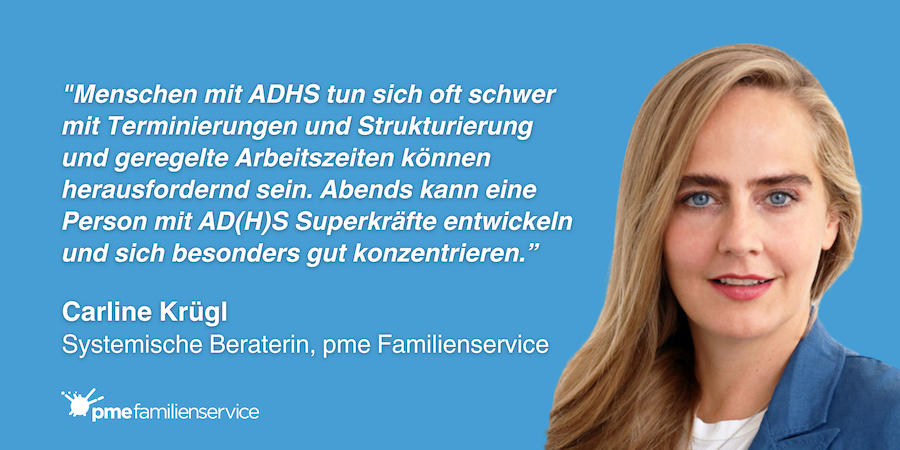
“In any case, both employees and managers should receive training. Understanding on both sides should be fostered. Even neurodivergent people sometimes struggle to understand the perspective of neurotypical individuals. An environment that not only tolerates diversity but actively promotes it helps prevent isolation and fosters a sense of belonging. Neurodivergent people should not be forced to conform but valued for their unique strengths,” explains expert Carline Krügl.
Conclusion: A win for everyone
Neurodiversity is much more than a buzzword - it can be a real added value for any company. "It is important to recognize the strengths of neurodivergent people without overlooking their challenges. The road to greater acceptance is often long and requires real commitment," sums up Carline Krügl. "When managers and teams recognize and specifically promote the different strengths and needs of neurodivergent employees, everyone benefits: the working atmosphere becomes more open, communication clearer and collaboration more diverse."
Innovations arise where different ways of thinking and perspectives come together. Measures that make working life easier for neurodivergent people - such as flexible working hours, structured processes and clear, respectful communication - ultimately benefit the entire team. They create an environment in which everyone can develop their potential.
An inclusive, neuro-friendly working environment is therefore not a special case, but an opportunity for more creativity, productivity and satisfaction.
This letscast.fm content can only be loaded if you accept the privacy policy of letscast.fm.
To the data protection settings "
FAQ: Neurodiversity and the world of work
What does neurodiversity mean in the company?
Neurodiversity describes the natural diversity of neurological characteristics and ways of thinking. In the company, it means recognizing and specifically promoting the different strengths and needs of employees with ADHD, autism, high sensitivity or other special characteristics.
How do companies benefit from neurodivergent employees?
Neurodivergent employees bring special skills such as creativity, pattern recognition, empathy and crisis resilience to the team. An inclusive working environment leads to more innovation and greater satisfaction.
What challenges do neurodivergent people face at work?
Typical hurdles include sensory overload, unclear communication, a lack of structure and traditional job interviews. Individual adjustments and open communication help to break down these barriers.
How can managers create an inclusive working environment?
Important measures include flexible working hours, quiet retreats, clear structures, training for teams and the promotion of an appreciative corporate culture.
What tips are there for neurodivergent employees?
Self-reflection, open communication about your own needs, the use of digital tools for organization and the search for a supportive, inclusive employer are helpful.