

Health Day 2026: Healthtainment That Gets You Moving
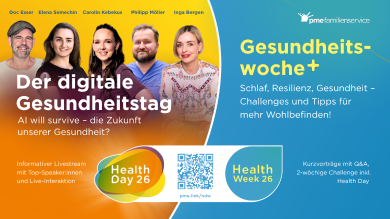
Over 35,000 viewers, inspiring ideas, and personal stories: Health Day combines health knowledge with pure emotion. Yesterday marked the fifth edition of the digital Health Day, powered by pme Familienservice and Mindance.
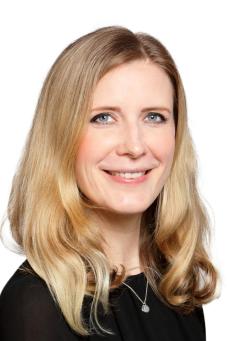
Editors: Gabi Strasser, Sabrina Ludwig, Isabel Hempel, Christin Müller
The hit series once again demonstrated how health topics can be presented in an informative, entertaining, and accessible way. Five speakers explored current health topics from a wide variety of perspectives—ranging from AI in medicine to mental stress, and even the question of what we can learn about life by confronting death.
In addition to in-depth knowledge and inspiring stories, there were practical tips for everyday life at home. Nutrition, exercise, and relaxation were also given plenty of attention during the Power Breaks. This brought health to life and made it something participants could experience firsthand.
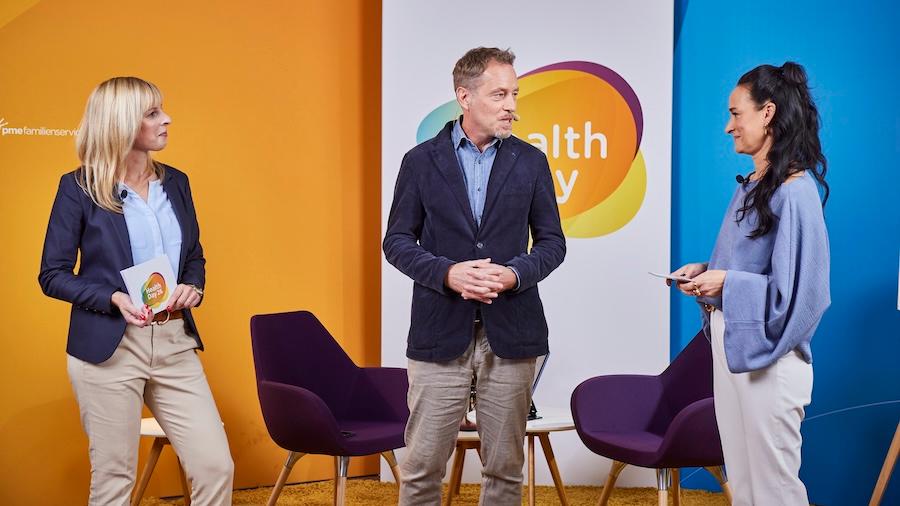
Premiere: Hosts Sarah Raupach and Jessica Mina-Knopp welcomed the audience alongside pme CEO Dr. Daniel Erler.
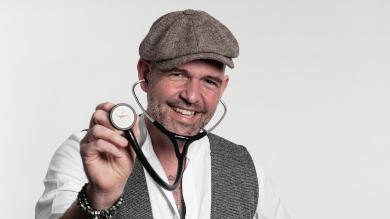
Doc Esser: AI as a Co-Pilot—Responsibility Remains with Humans
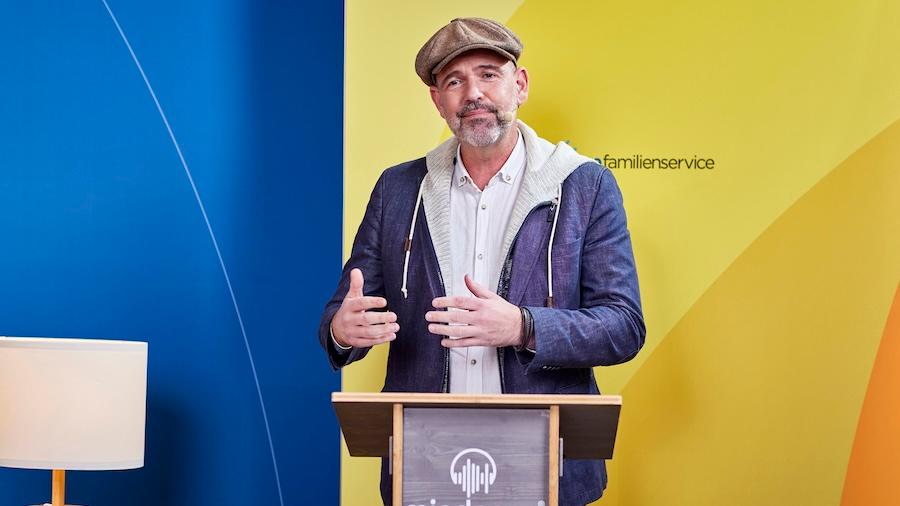
Dr. Heinz-Wilhelm Esser, also known as Doc Esser, kicked off Health Day with his keynote address.
“Without AI, we won’t be able to handle everything that lies ahead for us in the healthcare sector.” Cardiologist and TV doctor Doc Esser opened his presentation with this clear assessment. Artificial intelligence can organize conversations, analyze data, and support doctors with diagnoses and documentation. In this way, it can free up valuable time for them to spend with their patients.
But Doc Esser also made it clear: AI can sound convincing and still be wrong. Medical responsibility should therefore not be handed over to a machine. For him, AI is not an autopilot, but a “co-pilot for doctors.” Used correctly, it can create space for what defines human care: listening, observing, and, together with patients, being able to tolerate uncertainty.
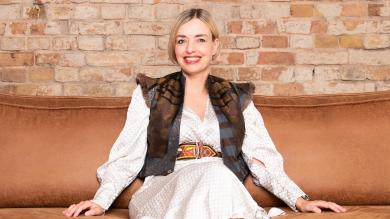
Elena Semechin: Finding New Strength Through Setbacks
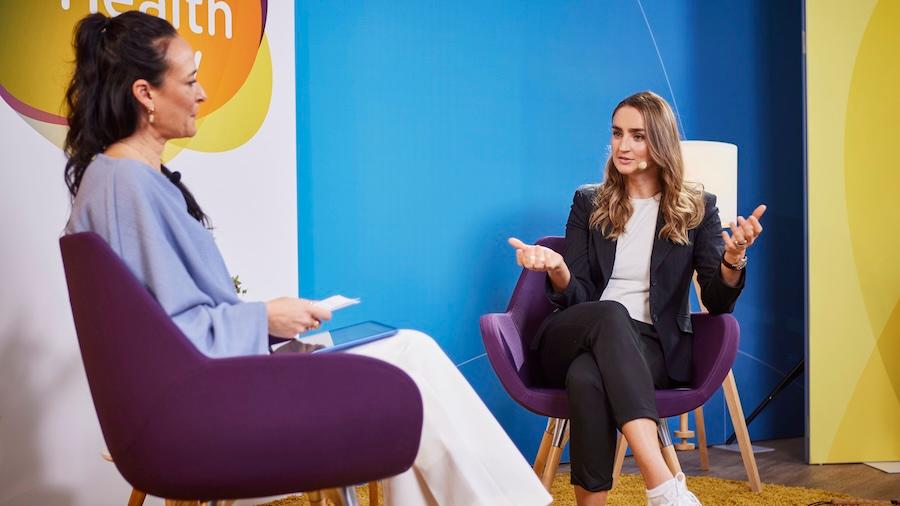
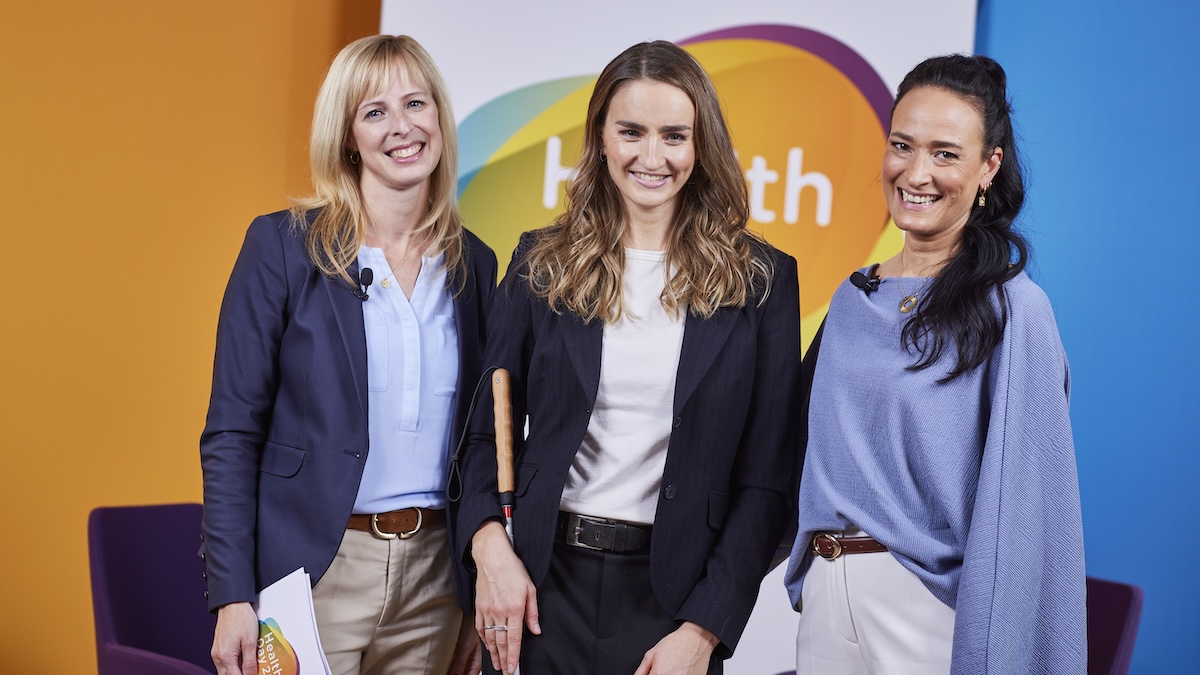
Elena Semechin is a Paralympic champion, mother, and entrepreneur with a strong personality.
Elena Semechin gradually lost her eyesight due to an eye condition she had had since childhood. She came to Germany at age 11, and at 13, she jumped into a swimming pool for the first time. There, she discovered a whole new world—and the dream of becoming a Paralympic champion.
Her journey took her through highs and lows. After finishing fifth in Rio in 2016, she initially wanted to quit swimming. Later, she realized how much she could learn from that setback. In 2021, she won gold in Tokyo. Shortly afterward, she was diagnosed with a brain tumor. Surgery, radiation, and 13 months of chemotherapy turned her life upside down. Step by step, she fought her way back—and in 2024 in Paris, she won gold again in the 100-meter breaststroke, setting a world record.
Today, Semechin is a mother and is preparing for the 2028 Paralympics in Los Angeles. Her talk was emotional and inspiring. She showed how she takes on challenges and uses setbacks to grow. Her message: It also depends on how we view a situation—and whether we let it break us or keep fighting. A touching insight into the strength that can emerge when you keep setting new goals for yourself.
Inga Bergen: How Gen Z Is Rethinking Health
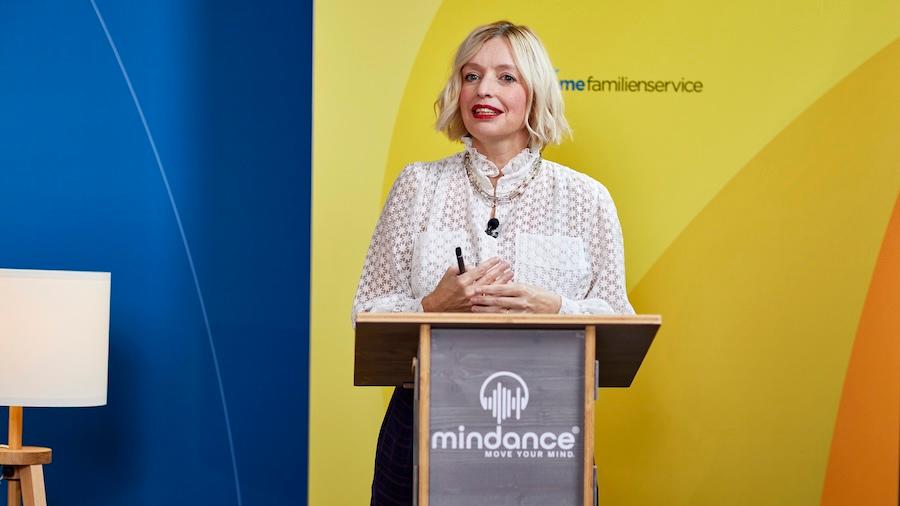
Digital health expert Inga Bergen discussed what older generations can learn from Gen Z.
Inga Bergen is one of the leading voices on innovation, technology, and AI in healthcare. As a consultant, investor, and advisory board member—as well as the host of the podcast “Visionaries of Health”—she explores how digital developments are transforming healthcare.
In her presentation, Bergen demonstrated how naturally young people, in particular, use digital platforms to find quick, easy-to-understand answers to health questions—including sensitive ones. ChatGPT and other AI models are increasingly becoming a go-to resource. According to Bergen, around 40 million people worldwide turn to such platforms with medical questions. Social media is also changing the topics of conversation: Issues such as endometriosis and menopause have gained greater public awareness through platforms like TikTok.
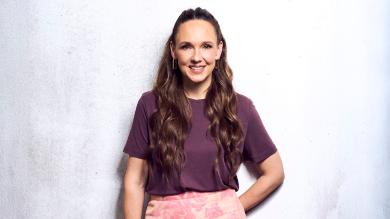
Carolin Kebekus: When the To-Do List Never Ends
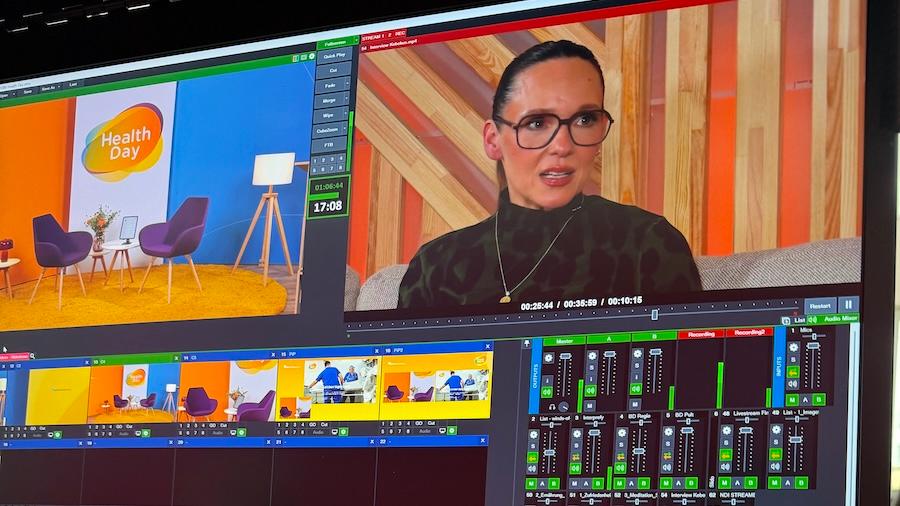
In an interview, Carolin Kebekus talked about her life as a working mother.
Carolin Kebekus spoke openly and with plenty of humor with host Sarah Raupach about motherhood, mental load, and the pressure to juggle everything at once. Since becoming a mother, her daily life has changed—and the list of things she has to keep track of seems never-ending.
Kebekus highlighted just how much invisible organizational and care work many mothers do. If you don’t have enough energy to do it all, that’s not a personal failure. She encouraged people to question their own expectations, accept help, and share responsibilities with their partner or a supportive network. At the same time, she said, structural changes are needed: more childcare spots, as well as greater recognition and a fairer distribution of care work.
Philipp Möller: What Death Tells Us About Life
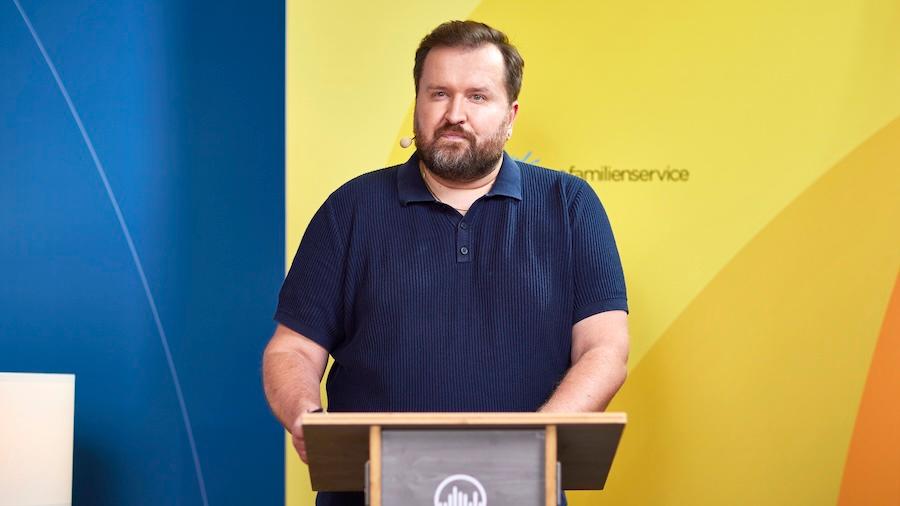
Forensic pathologist Philipp Möller captivated the audience with insights from the autopsy room.
To wrap things up, forensic pathologist Philipp Möller gave the audience a glimpse into his extraordinary day-to-day work—and dispelled some misconceptions stemming from crime dramas. Forensic medicine involves far more than just autopsies: Injuries sustained in violent crimes from which the victim survived can also provide important clues. The body, according to Möller, is an “archive of life.”
Based on his work, he issued a clear appeal: “Take your health seriously, without turning it into a moral test of achievement.” Prevention must begin early, he said, because health problems often develop over a long period of time. At the same time, health cannot be completely controlled. Therefore, someone who is sick has not automatically done something wrong. With objectivity and palpable humanity, Möller reminded his audience of how precious life is.
What is the pme Health Day?
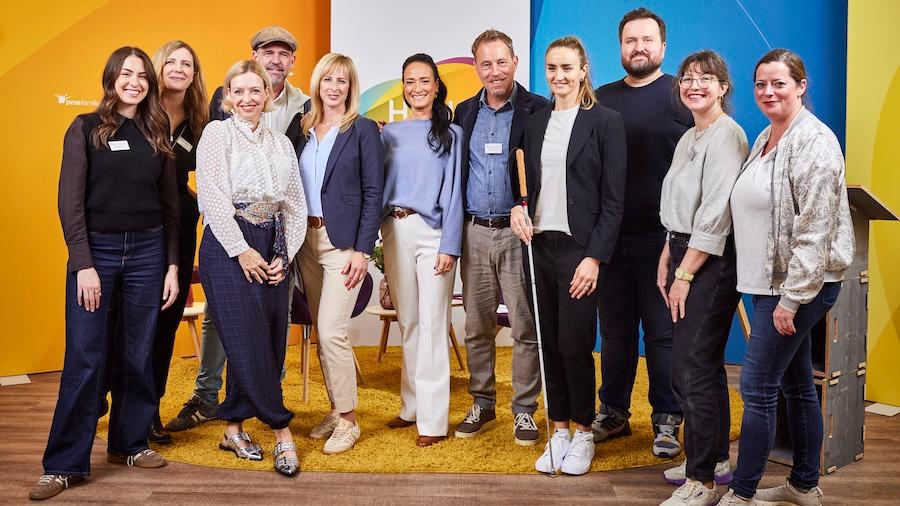
The team behind pme Health Day 2026.
The pme Health Day took place for the fifth time in 2026 as a livestream (in 2021, it was still known as “Digital Health Day”). In recent years, it has established itself as a major event in the field of workplace health promotion. Over 35,000 viewers have benefited in recent years from the inspiring insights of renowned speakers and industry professionals.
These speakers have previously appeared at Health Days: Carolin Kebekus, Prof. Dr. Dietrich Grönemeyer, Dr. Eckart von Hirschhausen, Miriam Höller, Samuel Koch, Doc Esser, Dr. Johannes Wimmer, Dr. Leon Windscheid, Steffi Jones, Elena Semechin, Dr. Pop, Michael "Curse" Kurth, Laura Fröhlich, Patricia Cammarata, Nathalie Stüben, Bastienne Neumann, and many more.
Companies across Germany can sign up for this program for their employees to provide them with valuable insights into their health. Want to learn more? You can find additional information about the topics and how to register on the pme Health Day landing page (link opens in a new window) (link opens in a new window) .
.png/2a93a64e-076b-5219-2221-5fe722c21df4/2a93a64e-076b-5219-2221-5fe722c21df4?imageThumbnail=2)