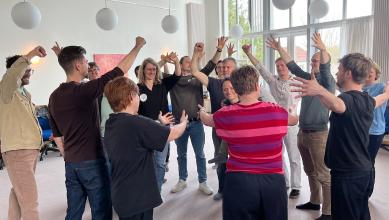


Networks at Capgemini: “Culture is created by all of us!”
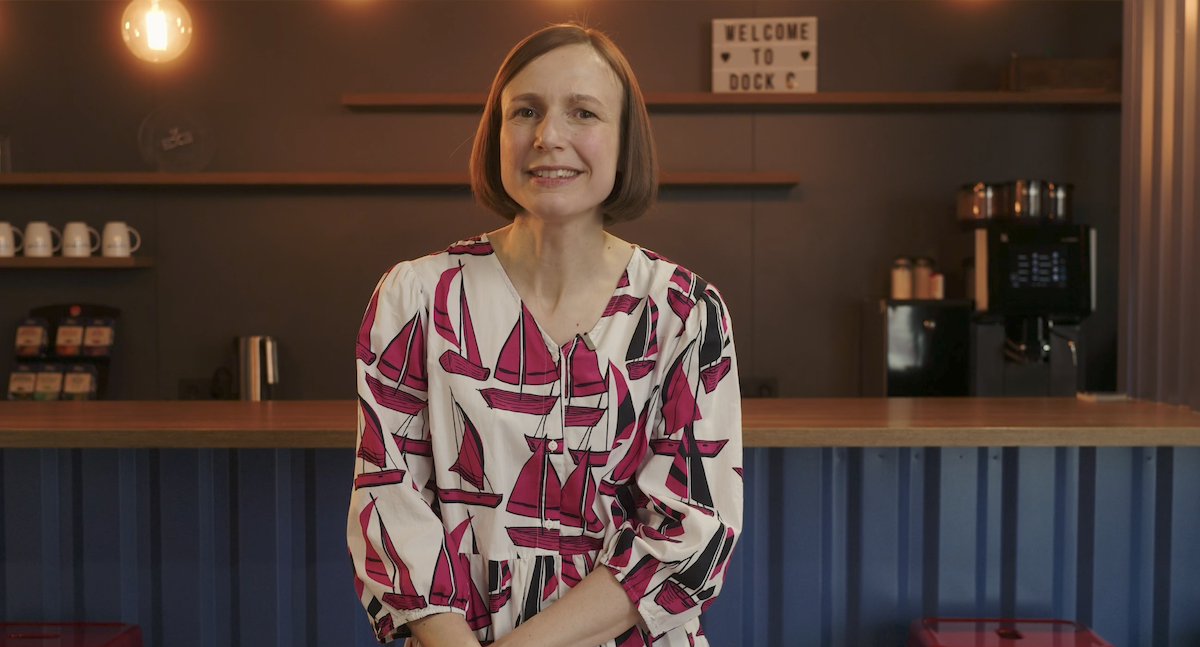
At Capgemini, employee networks are at the heart of our diversity and inclusion efforts. They bring together people with different experiences and perspectives, raise awareness, and empower employees to actively shape the company culture. Kerstin Papenberg, Head of Diversity, Equity, Inclusion & Belonging at Capgemini in Germany, explains what networks exist at Capgemini, how they are formed, and why more is needed than just a listing on the website or intranet.
Eight networks, one common goal
What are the different employee networks at Capgemini in Germany?
Kerstin Papenberg: We now have eight networks focusing on women, Pride, disability, neurodiversity, co-leadership, equal opportunity, and cultural diversity—and the most recent network to be established is centered on care.
What's behind the new Care Network?
Kerstin Papenberg: The Care Network focuses on family from a parent-child perspective, as well as on caregiving. Care work has many different facets. Among other things, we offer flexible work schedules and support for balancing work and family life, and precisely because networking is so important to us, there was still something missing.
How crucial are these networks to your strategy?
Kerstin Papenberg: Forus, networks are the linchpin. Now I’m going to say my favorite phrase: Culture is created by all of us. Everyone who works here should have the opportunity to get involved and help shape this culture. When I’m personally affected, I gain insights that are completely different from those I have when I look at an issue from an organizational perspective.
These networks reflect who we are as an organization and help us move forward. It is important to us to actively involve our colleagues, listen to their experiences, and seek their feedback. Only in this way can we grow together.
We still have a long way to go—there’s no question about that. But together, we’ve already accomplished a great deal. We’ve only been able to do this because we’re so committed to promoting networking. And because we have so many wonderful colleagues who are actively involved in these networks. It’s not enough to say, “It’s on our website and the intranet.” It has to be part of our everyday lives and something we can actually experience.
Capgemini is a global company with approximately 410,000 employees in over 50 countries. The networks operate in many countries as well as at the global level. At the same time, each country focuses on local needs.
How a Network Forms: No Hierarchy, No Prior Experience
How are the networks established, and who can get involved or take on a leadership role?
Kerstin Papenberg: Networkscan be established in any way imaginable. For example, if a colleague says, “I think the topic of family is important and would like to start a network around it,” I’m often the first person they turn to, and together we look at: What is our stance as a company? What are the framework conditions? How can the network grow and attract members?
Do you need leadership experience or hold a specific position to do this?
Kerstin Papenberg: Wedeliberately give the networks a lot of creative freedom. What’s important is that the topics relate to diversity, equity, inclusion, and belonging, as well as to our values and our work environment. Beyond that, we’re very open-minded. Anyone can take the lead. You don’t need to be at a certain level in the hierarchy, and you don’t need to prove that you’ve done this before.
This is a common thread in our corporate culture: You can help shape the company. Most of our new networks are initiated by our colleagues. They say there’s a need here—and I say, “Let’s go.”
How are the networks supported from an organizational perspective, and what role does HR play in this?
Kerstin Papenberg: Themain part of my job is to be there for the networks. That’s a deliberate resource. In my role, I’m a kind of “facilitator.” We support the networks with time and financial resources when needed for events or initiatives.
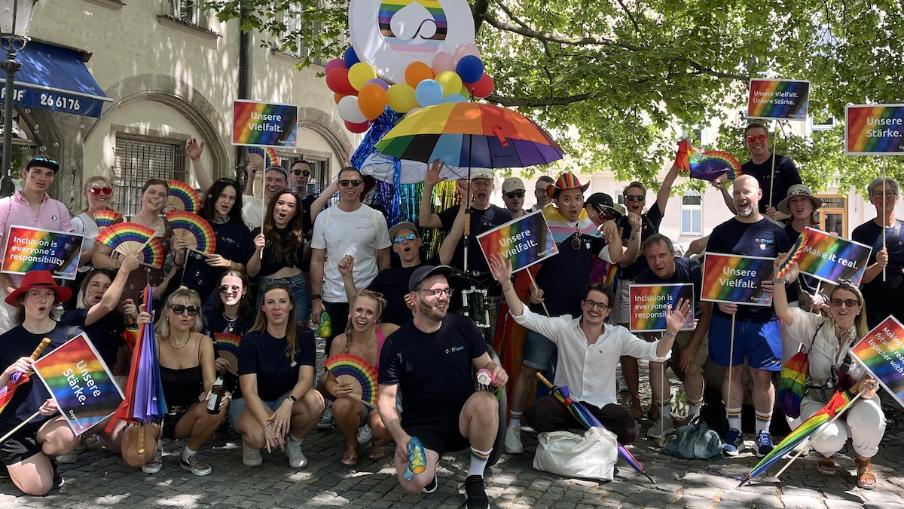
For example, we facilitate participation in Christopher Street Day events or LGBTQIA+ career fairs such as “Sticks and Stones.” Our women’s network, together with partners and clients, organized events to mark International Women’s Day: This time, we put together a full month of activities featuring online sessions such as “Female Finance and AI” and “Data Power, Women Power,” culminating in a joint in-person closing event.
The funding can also be used for internal events, speakers, or external input. The goal is to enable the networks to grow and thrive.
Executive sponsors foster networking
You recently introduced the role of executive sponsors. What is their role?
Kerstin Papenberg: Each ofthe eight networks has an executive sponsor from the executive board or top management in various areas of our company. On the one hand, this is about leading by example when it comes to inclusion. After all, leadership always starts with you as a leader. On the other hand, they can bring perspectives from the networks into strategic discussions and help ensure that important issues receive the visibility they need.
For example, if a network provides feedback that we could make our offices even more inclusive by introducing “quiet spaces,” HR can take up the issue but cannot decide on its own to redesign the spaces. An executive sponsor can bring the issue to the right level of management—in collaboration with HR—to provide additional support and ensure that such perspectives are incorporated into decision-making. Executive sponsors play a particularly important role in this regard.
What next steps are you planning to make the networks even more inclusive and effective?
Kerstin Papenberg: Welook at what the networks need to continue developing. Their needs vary widely. It depends, for example, on how long a network has been in existence, how many members it has, what its goals are, and so on. We maintain close communication with one another; it’s not a one-way street.
We are considering how we can further strengthen collaboration between the networks. While a focus on specific aspects of diversity remains important, joint activities can have an even greater impact in line with the principles of intersectionality.
Can you give a specific example?
Kerstin Papenberg: One example thatcomes to mind isa joint session between our LGBTQIA+ network and the NeuroAbility network during Inclusion Week. And at our event for German Diversity Day, all eight networks introduced themselves and organized the event together—with the goal of fostering genuine dialogue and recruiting new members.
Personal Stories: What Networking Really Achieves
Is there a personal story from a network that has particularly shown you how important this work is?
Kerstin Papenberg: Thereare quite a few. Just the opportunity to build a network has a huge impact. Colleagues realize: “I’m not alone in this. I can feel confident enough to be myself. I’m allowed to be who I am here.”
Do you have a specific example of that?
Kerstin Papenberg: I’mthinking, for example, of a colleague who leads our NeuroAbility network. We originally met through a talent development program. Later, she told me that Capgemini UK has a network focused on neurodiversity and how wonderful it would be if something like that existed in Germany, too. I asked her, “What’s stopping you?” And that’s how, out of a completely different connection, the idea to start this network was born. We empowered each other: “Hey, why don’t you just do it?”
Another example is a colleague from our network for people with disabilities. He suggested participating in job interviews when needed to provide additional perspectives and identify potential barriers in the recruiting process early on. We have since adopted this approach.
What I find particularly wonderful about this is that such ideas emerge directly from the networks. Colleagues contribute their own experiences, perspectives, and suggestions, thereby actively shaping change. This works because we encourage this exchange and because networking is firmly embedded in our culture.
Is there another example that has really stuck with you?
Kerstin Papenberg: Acolleague also suggested organizing an event where we’d talk not only about what’s going well, but also about what went really wrong at one point. After all, you often learn the most from things that didn’t work out. We put that into practice as part of our Inclusion Week. A few weeks ago, he reached out again and asked, “Kerstin, how’s it going? That really encouraged all of us—shouldn’t we do that again this year?”
To me, that is exactly what diversity and inclusion look like in practice: not just talking about it, but creating spaces where people can express themselves, share experiences, and drive change—and actively doing so and demanding it. Even though we’re not there yet, we’ve made significant progress in recent years because we have the support, the structures, and the commitment that make such initiatives possible.
The pme Familienservice Group is one of the largest providers of EAP (Employee Assistance Programs) consulting and family services in the German-speaking world.
For over 30 years, we have been helping employees and executives balance their professional and personal lives—in complete confidence and 365 days a year.
With the Work:Life Academy for executives and employees, as well as the Mindance app, we provide a comprehensive EAP program—for better mental health, a better work-life balance, and more productive teams and leaders.
You can find out more about the pme Familienservice Group here.