

Neurodiversity in children: Meaning, examples & diagnosis
ADHD, dyscalculia, dyslexia, and giftedness are some examples of neurodivergence that can occur in children. In this article, you will learn what neurodivergence is, how to recognize it, and how you can best support your neurodivergent child at school and in everyday life.
Expert: Rebecca Brielmaier, certified early childhood educator, pedagogue, and specialist consultant in the area of parents and children at pme Familienservice
Neurodiversity in children encompasses innate differences in thinking, learning, and behavior—such as ADHD, autism, dyslexia, or giftedness. This approach emphasizes the diversity and uniqueness of neurological development without viewing it as a deficit. Parents, teachers, and professionals can best support neurodivergent children by fostering individual strengths, breaking down barriers, and creating an inclusive learning environment.
What you can expect in this article:
In today's society , there is a wide variety of ways of thinking, learning, and behaving that go beyond the former understanding of "normal." This natural diversity of neurological development is called neurodiversity and describes different brain structures and functions.
Approximately 20–22% of the population in the European Union is considered neurodiverse —meaning that one in five people's brains function differently from the majority.
"The terms neurodiversity and neurodivergence help us to appreciate and better understand different learning styles and behaviors. A society that recognizes neurodiversity creates space for individual strengths and needs—making our world more colorful and richer." – Rebecca Brielmaier, trained educator, pedagogue, and specialist consultant in the area of parents and children at pme Familienservice.
When children are diagnosed with neurological differences such as autism, ADHD, giftedness, dyslexia, or dyscalculia , it is important to understand that neurodivergent children bring unique abilities, talents, and perspectives to our society and thereby enrich it. By recognizing and supporting their needs and strengths, we create an inclusive and diverse environment in which every child has the opportunity to reach their full potential.
This Vimeo content can only be loaded if you accept the privacy policy of Vimeo, LLC.
To the data protection settings "
Neurodivergent children often have to expend a great deal of energy to meet certain expectations, standards, and norms. Some try to hide their differences in perception, thinking, or behavior—a behavior that experts refer to as masking or camouflaging .
This enormous effort can have a lasting negative impact on emotional and cognitive development and increase the risk of mental health problems.
Neurodiversity – Simply Explained!
"Neurodivergence"is composed of the words "neuro" (brain, nervous system) and "divergent" (deviating, different).
Neurodivergence refers to when certain brain functions in a person work so differently that they are no longer considered "normal" or "neurotypical" within society. This term is used to describe neurological differences in perception, information processing, and thinking that deviate from the social "norm" and are at the same time part of human diversity.
Events on Neurodiversity in Children
What distinguishes neurodivergent people from "neurotypical" people?
Neurodivergent people, therefore, differ in the way they think, learn, feel, and perceive the world. As a result, neurodiversity has become established as an umbrella term for autism, ADHD, and dyslexia.
Unlike in the traditional medical model, these differences are not considered illnesses or deficits, but rather natural variations in human neurological development. Neurodiverse brains simply process information differently, which is why they face greater problems and challenges in a society built around neurotypical brains.
Where does the term neurodivergence come from?
The term “neurodivergent” was originally coined in 1998 by Dr. Judy Singer as part of the neurodiversity movement. At the time, the movement focused primarily on people with autism and was launched by autistic activists to promote a positive view of neurological differences.
The concept of neurodiversity in the broader sense was first described at the National Symposium of Neurodiversity in New York in 2012. According to this concept, neurobiological differences are regarded as a natural predisposition and are a biological fact, similar to skin color or body size.
This relatively new concept thus created a conceptual alternative to traditional models of medicine, which viewed neurodiverse behavior as disturbed or pathological. From the perspective of neurodiversity, neurodivergent people are not necessarily ill, but rather live in a society that was often created by and for neurotypical people . This results in challenges and social barriers that lead to discrimination and inequality.
What counts as neurodiversity?
Neurodivergence encompasses a wide range of neurological differences and variations that can occur in children. Many "developmental disorders" diagnosed in medicine also fall within the spectrum.
These diagnoses fall under the term "neurodiverse":
- Attention disorders such as ADHD and ADD
- ASD (Autism Spectrum Disorder)
- Dyslexia (dyslexia)
- Dyscalculia (dyscalculia)
- SMS (sensory modulation disorder)
- Dyspraxia (developmental disorder of motor functions)
- Giftedness
- high sensitivity
- Tourette syndrome
- Synaesthesia
In addition, there are discussions as to whether mental illnesses or personality disorders such as borderline should also be included.
Neurodiversity does not automatically mean a diagnosis, but includes all forms of different neurological functioning.
Diagnosis & symptoms: How to recognize neurodivergence?

As mentioned above, neurodivergence refers to differences in perception, information processing, and thinking. However, it is not a condition that needs to be treated.
Nevertheless, differences between neurotypical and neurodivergent people can be observed.
Put simply, neurotypical people can be understood as those who are able to cope with academic, professional, and social demands using the means available to them, in a similar manner, in a similar amount of time, and with a similar amount of energy as most of their fellow human beings.
Symptoms of neurodivergence in children
Neurodiversity in children manifests itself in many different ways. There are no "standard" symptoms, but rather a broad spectrum of different characteristics. Neurological peculiarities often manifest themselves
- in challenges with attention, learning,
- in social interaction
- or in sensory perception.
How does neurodivergence manifest itself in children's everyday lives?
For neurodivergent people, everyday tasks can often become particularly challenging because our society has certain expectations of "normal" behavior.
Those who deviate from these norms encounter obstacles more quickly—not because of a lack of ability, but because structures and processes are not always designed to meet diverse needs.
For neurodivergent children, this means in everyday life that
- that they often need alternative strategies and methods,
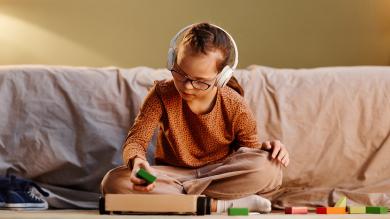
- that they sometimes use aids (e.g., headphones to protect against sensory overload),
- that they need more rest and distance to calm their nervous system,
- that information must be presented to them in a different way in order to achieve learning success.
- that they sometimes need extra time to process changes and adapt,
- that flexible and individual solutions in school, work, and everyday life are crucial for them to develop their potential.
In the article“The Invisible Exhaustion of Parents of Neurodivergent Children,” two mothers of neurodivergent children share their experiences. They shed light on the invisible caregiving work and the associated psychological strain, and show how understanding and support from those around them can ease the burden.
"Despite all the challenges, neurodivergent children often have unique talents. They are frequently creative, have a good memory for details, develop intense interests, or show great perseverance in certain areas. By promoting these strengths, they can develop their full potential and grow with confidence." – Rebecca Brielmaier, trained educator, teacher, and specialist consultant in the area of parents and children at pme Familienservice.
Diagnosis of neurodivergence in children
Neurodivergent developmental disorders are diagnosed by medical specialists, psychologists, or specialized therapists. The diagnosis is based on observations, interviews, and standardized tests. Early diagnosis is crucial, as it enables the initiation of targeted support measures.
Parents, educators, and teachers play an important role by observing closely, documenting conspicuous behaviors, and passing this information on to professionals. This allows for a comprehensive assessment to be made, providing the child with the best possible support.
So-called comorbidities often occur —that is, children are diagnosed with multiple conditions or neurological characteristics at the same time, such as ADHD and dyslexia, or autism and giftedness.
The combination of these different characteristics can bring with it individual challenges and special support needs.
How to Support Your Neurodivergent Child's Learning – 7 Tips
Neurodivergent children can differ significantly from their peers in terms of their behavior, learning, or perception. Some are particularly active and impulsive, while others tend to be more withdrawn or highly focused on certain topics.
Sensory sensitivities or difficulties in social interaction may also occur. It is important to note that these differences are an expression of the unique way their brains work.
Neurodivergent children want to learn just as much as neurotypical children. However, in our society—especially in the existing education system—this is often much more difficult for them, as expectations are not adapted to the reality of neurodivergent children. The key, therefore, is to understand how the child's brain works and to create a supportive learning environment.
This article explains how parents can recognize learning difficulties in their children and how to deal with them: Learning difficulties in children: Diagnosis, treatment, and help for parents
1. individual support
Neurodiverse children can benefit from individualized learning support such as tutoring, as they have different learning styles and needs that may not be met in the classroom. In 1:1 lessons, the tutor can focus on the child's specific strengths and challenges.
2. open communication
Parents should talk to teachers about this. This is because open communication promotes understanding and acceptance in the school environment. Parents and teachers can work together to break down barriers, reduce prejudices and achieve individual learning goals.
3. create if-then plans
If the child has reduced impulse control and problems concentrating, it can help to draw up if-then plans. "If I know the answer but the teacher doesn't call on me, I'll write it down instead of just shouting it out." "If I want to move around, I won't just get up, but draw a pattern on the tabletop with my fingers."

4. reformulate weaknesses into strengths
It also helps children to learn to recognize their perceived weaknesses as strengths. People who let their minds wander are often creative. People who are impulsive often have a captivating manner and act spontaneously. People who cannot focus on one thing for long often have diverse interests and are therefore better at recognizing connections.
5. seek professional help
The concept of neurodiversity views neurological differences not as disorders, but as natural variations in human development. Nevertheless, a medical diagnosis such as autism or ADHD ( ) isoften important for gaining access to therapies, assistive devices, and medications .
Specialists, therapists, and specialized counseling centers can provide valuable guidance to parents and children and work together to develop practical and effective strategies. A diagnosis is therefore not just an official finding, but an important step toward greater self-understanding, relief, and targeted support.
Our parent counselors support parents in all matters from pregnancy to the child's adulthood.
Personal and confidential: We are there for you online, by phone and on site. You can find more information on the pme parent counseling page.
Book recommendations from Rebecca Brielmaier on neurodiversity in children
Guide for parents of neurodivergent children:
- "A Head Full of Gold: What Neurodivergent Children Need and How We Can Empower Them" by Saskia Niechzial
- "Wonderfully Different" by Louise Gooding (DK Verlag). A thoughtful non-fiction book for children ages 7 and up and their parents that explains neurodivergent differences such as **AD(H)D, autism, and dyslexia in a child-friendly way and presents them as strengths.
Children's books for children and parents to read together:
FAQ: Neurodiversity in children
What does neurodiversity mean in children?
Neurodiversity describes the natural diversity in thinking, learning, and behavior among children. Differences such as ADHD, autism, or giftedness are part of this.
What are some examples of neurodivergent children?
The most common forms include ADHD, autism spectrum disorder, dyslexia (LRS), dyscalculia, and giftedness.
How does neurodiversity manifest itself in everyday life?
Neurodivergent children may have particular challenges with attention, social interaction, or sensory perception and often require individualized support.
How is a diagnosis made?
Specialists, psychologists, or therapists make diagnoses—usually based on conversations, observations, and tests. Parents and teachers support this process through documentation and communication.
How can I support my child in their learning?
Focus on individual support, open communication with the school, and flexible learning solutions. Accept differences and strengthen your child's special abilities.
Is neurodiversity a disease?
No. Neurodiversity describes natural neurological differences and is not a condition that needs to be treated.
From April to July 2026, pme Familienservice will explorethetopic of neurodiversity through a variety of educational and discussion formats Familienservice its“Wunderwerk Gehirn”initiative.