Digital Health Expert Inga Bergen
Body & Soul

Inga Bergen: How Generation Z Is Changing Healthcare

Inga Bergen is THE expert when it comes to digital health in Germany. As an entrepreneur, investor, podcaster, and sought-after speaker, she is shaping the discussion on the future of healthcare. In this interview, she discusses why our healthcare system still lags behind technological possibilities, how Generation Z is changing the way we approach health, and which innovations are actually making a difference. Inga Bergen will be speaking at Health Day 2026.Interview: Simone Bohny/Christin Müller

​​​​​​​"I look forward to a medical field that recognizes that women aren't just little men." (Inga Bergen)

What motivates you to be so passionate about the future of healthcare?

Inga Bergen: I’ve founded and led two companies in the digital health sector—and in doing so, I’ve learned just how slowly a system moves that should actually be the most innovative one we have. What drives me is the gap between what has long been medically and technologically possible and what people actually experience when they’re sick. This gap isn’t a technological problem. It’s a problem of structure, incentives, and courage. And that’s exactly why I’m staying the course: because it can be solved.

In your opinion, what makes Generation Z different from other generations when it comes to health?

I’m cautious about generational narratives—they often explain less than they claim to. But what I really observe is this: This generation no longer makes a clear distinction between health and everyday life. Mental health, sleep, nutrition, exercise, work—these form a continuum, not a set of separate areas of responsibility. This clashes with a system that is organized precisely along lines of responsibility: boundaries between medical specialties, between sectors, and between payers. The conflict isn’t “young versus old.” It’s “integrated experience versus fragmented care.”

Gen Z is the first generation to have grown up entirely with digital technologies. What expectations will they therefore have of doctors, hospitals, and health insurance companies in the future?

Three that I consider to be structural:

First: Expectation sovereignty. People who are used to every service being transparent, bookable, and easy to track won’t accept that an appointment takes six weeks and no one can explain why.

Second: Access to data as a given. Not as a right that must be fought for, but as a fundamental condition.

Third—and this is often underestimated—is the quality of the relationship. Digital literacy does not mean a desire for distance. On the contrary: the more interchangeable the transaction, the greater the value of genuine medical care. Anyone who thinks an app can replace that connection has misunderstood the issue.

What digital developments will truly change the way we approach health in the coming years?

Not so much the spectacular ones, but rather the mundane ones. Interoperable data. AI in documentation and decision support—not because it replaces doctors, but because it frees up their time. And above all: moving diagnostics forward—from the hospital to everyday life, from acute care to early detection.

What interests me more than the technology is the question of who benefits from it. We’re currently in danger of building a system that works exceptionally well for digitally empowered, well-insured people who are health-conscious—and makes things worse than before for everyone else. This isn’t a technical issue, but a matter of distribution.

Many young people today are much more critical of medical advice than previous generations. Is this a sign of greater health literacy or a dangerous overconfidence?

To be honest: neither. I think the question doesn't quite capture the issue.

What we are seeing is not an increase in competence or arrogance, but a loss of trust in institutions coupled with a radical shift in information sources. That is something different.

Health literacy—as measured by standard tools—tends to be rather low across all age groups in Germany, including among young people. What has changed is not people’s ability, but their access: Today, every recommendation is immediately accompanied by a thousand other voices, and none of them bears a seal that can be recognized at a glance.

The answer to this isn’t to reclaim authority. You either have it or you don’t. The answer is to provide a rationale. Saying “That’s just how we do it” doesn’t work anymore. Saying “That’s how we do it because—and here’s the evidence, and here are its limitations” does work very well. It’s more work. But it’s also better.

You speak with many thought leaders in the healthcare sector and have been following innovations for years. Looking ahead to the next ten years, which developments are you most excited about?

The moment when “prevention” is no longer just a buzzword everyone tosses around in political speeches but that no one actually funds. We’re currently witnessing a rare convergence of factors: the technology is here, cost pressures are inevitable, and a new generation is emerging for whom prevention isn’t a sacrifice but a form of self-empowerment. When these three elements come together, something fundamental shifts.

And, to be more specific: I’m looking forward to a medical field that recognizes that women aren’t just little men. Things are finally moving in that direction—too slowly, but they’re moving.

To wrap things up, here’s a quick generational quiz: If you could “steal” one trait from Generation Z, which one would it be? And conversely, is there anything Generation Z could perhaps learn from older generations?

If I could, I’d steal the ease with which this generation talks about mental health. My generation dealt with it on our own and called it strength. It wasn’t.

Conversely: Be patient with systems. Not compliance—patience. Some important things don’t change in eighteen months, but in eighteen years, and anyone who’s only looking for quick results will walk out before things get interesting.

No one approaches the truly major shifts in the healthcare sector as a sprint.

pme Health — Holistic Workplace Health Management

We offer in-person and digital consulting in organizational development, GBU Psyche, and BEM design and support—supplemented digitally by our Mindance app, which features over 1,000 interactive video and audio sessions, bookable one-on-one coaching sessions, and a 24/7 ExpertLine. 

Discover Now: Health Management for Businesses

zero pme Familienservice Named a Kununu Top Company Familienservice the Fifth Time

Profile of pme Personnel Development, Recognized as a kununu Top Company
News

pme Familienservice Named a Kununu Top Company Familienservice the Fifth Time

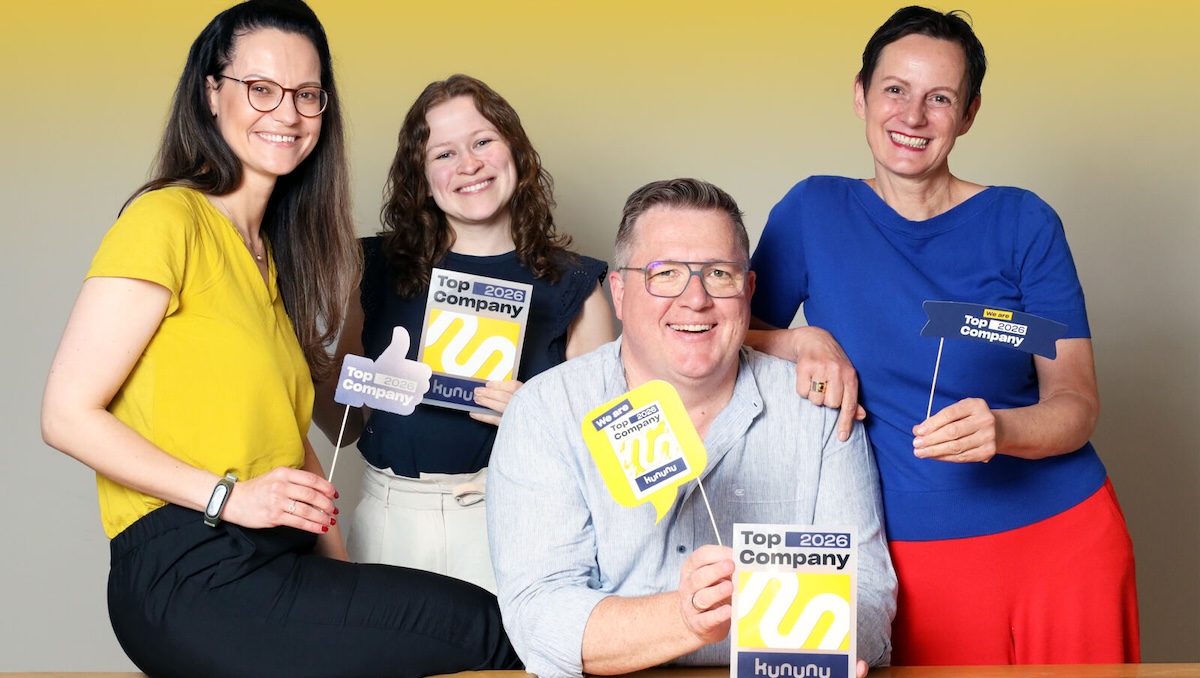
Berlin, July 16, 2026 – pme Familienservice has once again been awarded the kununu Top Company Seal for 2026. The award is based exclusively on independent employee reviews on kununu and demonstrates that pme is among the employers with particularly high employee satisfaction. 

Nils Hofert, Head of Human Resources at pme Familienservice, summarizes:

"We are very pleased to have once again been recognized as a kununu Top Company. This confirms that our efforts to foster a supportive, family-friendly, and modern corporate culture are paying off. For us, this sends an important message to employees and job applicants: At pme, human support is just as important as professionalism."

Key Facts About the kununu Top Company Seal

The seal is awarded solely on the basis of independent employee reviews on kununu. About five percent of all companies on kununu receive the Top Company seal each year.  

To qualify for the 2026 kununu Top Company seal, a company must meet the following criteria: 

  • At least seven reviews from employees since the profile was created. Reviews from applicants are not counted. 
  • A rating of at least 3.8 stars (out of a possible 5), both overall and in employee reviews. 
  • Over the past twelve months, employees' rating scores must have been at least 3.8 stars. 
  • At least two new reviews in the last twelve months. An updated review also counts as a new review here.

“We congratulate pme Familienservice once again being awarded the Top Company seal. For the fifth year in a row—that’s something truly special, says Nina Zimmermann, CEO of kununu.“Only five percent of companies qualify for this special seal. This sends a positive message, both as a showcase for potential applicants and as a reflection of the company’s culture to its employees.” 

For pme Familienservice , this award serves as Familienservice recognition and motivation to further develop its offerings for employees—ranging from flexible work arrangements to family-oriented benefits. For years, pme Familienservice committed to helping employees balance work and family life in a spirit of partnership and to supporting employees in various life situations.  

About the pme Familienservice Group 

For over 30 years, the pme Familienservice has been Germany’s leading provider of Employee Assistance Programs (EAP) and family support services. With more than 2,000 employees, the company supports employers and their employees in all aspects of life—from childcare and elder care to mental health and work-life balance. 

Press contact 

Ifenna Ekezie-Gellersen  
Press and Public Relations  
pme Familienservice
Flottwellstraße 4-5    
10785 Berlin  

Phone: 030 263935622 
Cell: 0151 68940705 
Email:familienservice