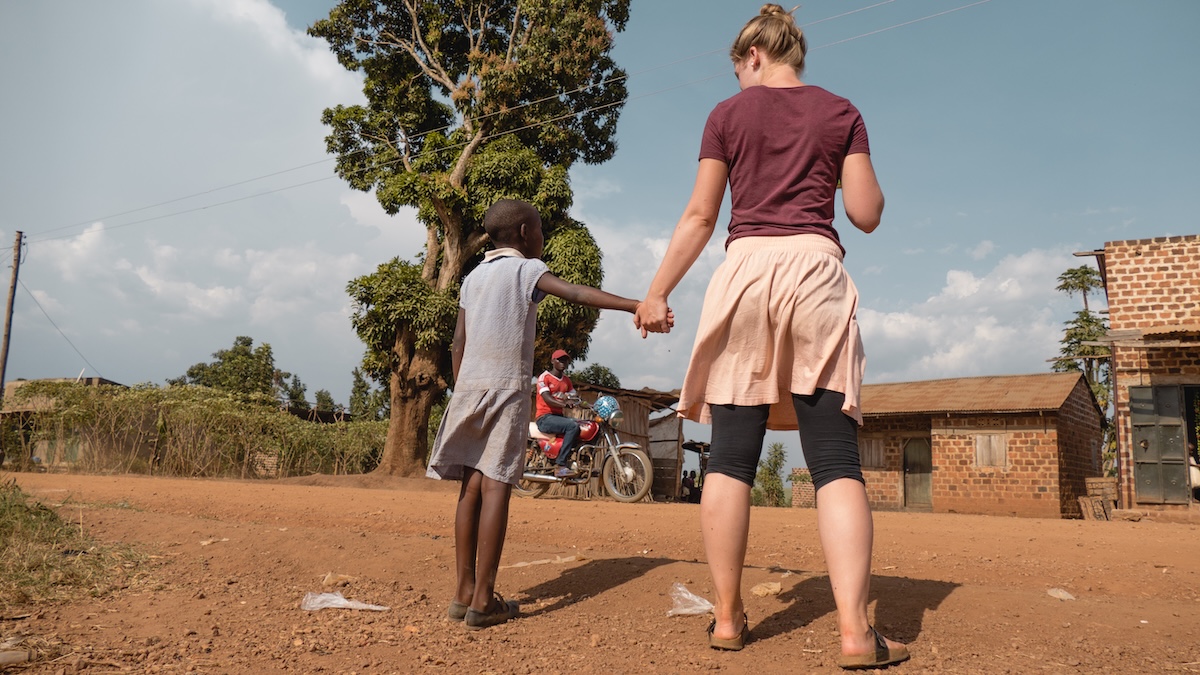
Nadine Oesterle Fundraising Project
News

pme Donates: Opportunities for Girls and Families in Uganda

"We don't want to make people dependent; rather, we want to help them become independent." (Nadine Oesterle) 

For many people in Germany, it’s hard to imagine that girls can’t go to school because of their periods. In Uganda, this is a reality for countless girls: They stay away from class, fall behind in their studies—and some eventually lose touch with their education entirely. Nadine Oesterle wants to change that. Through Yeshanah Mission, she educates girls about menstruation. But that’s only part of the work: Through sponsorships, the initiative enables children to attend school and supports families with educational programs and training that open pathways to self-sufficiency. The pme Familienservice has supported Yeshanah Mission with 6,250 euros.

What was your personal motivation for establishing the “Yeshanah Mission” family center in Uganda?

Nadine Oesterle: Yeshanah Mission is intended to become a family center where families are trained and equipped with skills that will support their independence, and to which a clinic will also be attached. 

For example, the family center will offer computer classes that enable local residents to keep pace with the rapidly advancing developments of our time.

The catalyst was our close contact with the families of the children in our sponsorship program, which gave us deeper insight into the concerns and hardships these families face. Through the family center, we want to look beyond education and empower families in the long term to provide for themselves independently. 
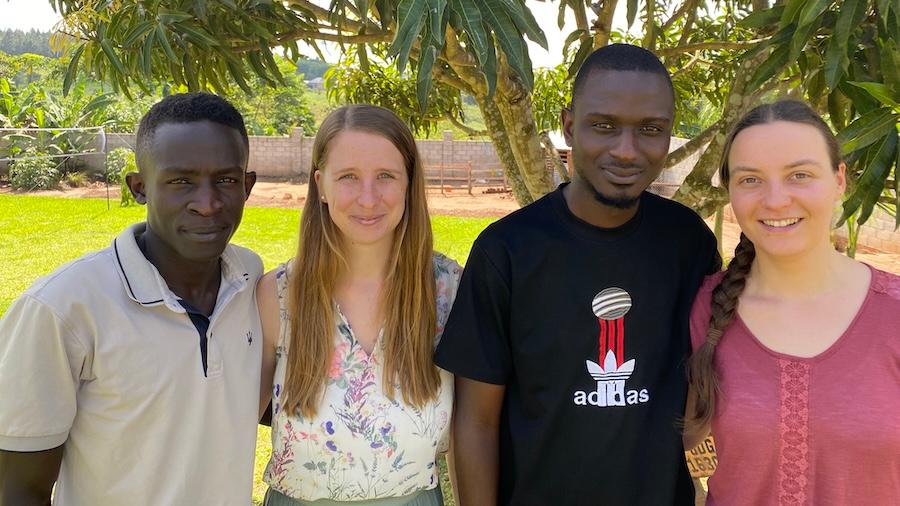

Nadine Oesterle (second from the left) and her team are working to help Ugandan families.

How exactly do you support the children? What specific projects have you already carried out, and which ones are still in the planning stages?

We support the children through sponsorships so that they can return to school or attend for the first time. Sponsors cover the school fees, but the families are responsible for school supplies such as uniforms and books, in order to involve them in taking responsibility for their children’s education. 

We now have 35 children in our sponsorship program, including one young man who is in college. We support the children and stay in touch with the local schools and the children’s relatives and families. 

With the support of Patenschaft+ we reach and empower girls and young women in schools and villages. Our educational program aims to educate young women about their bodies and empower them to make their own decisions.

We’ve just started offering training sessions for women. In these sessions, they learn how to sew their own washable hygiene kits using simple, locally available materials. This enables them to help others while also equipping them to start their own businesses by selling these hygiene kits. We’d like to expand this area further to promote self-reliance, broaden our reach, and achieve a long-term impact.

In addition, there will also be a section for startups in the future to provide families with financial start-up assistance. This includes training on topics such as how to start and run a business, how to write a business plan, and how to calculate income and expenses.

Can you tell us more about the “Patenschaft +” project?

It all started with sponsorship programs that enable children to attend school. But when we took a closer look, we found that only a fraction of the children go on to secondary school, and an even smaller proportion even finish elementary school. And this affects girls in particular.

One reason is that girls often fall through the cracks as soon as they start their periods, and another reason is the extremely high rate of teenage pregnancies. It’s a major taboo, and very few girls have received sex education or know how to manage their periods properly.
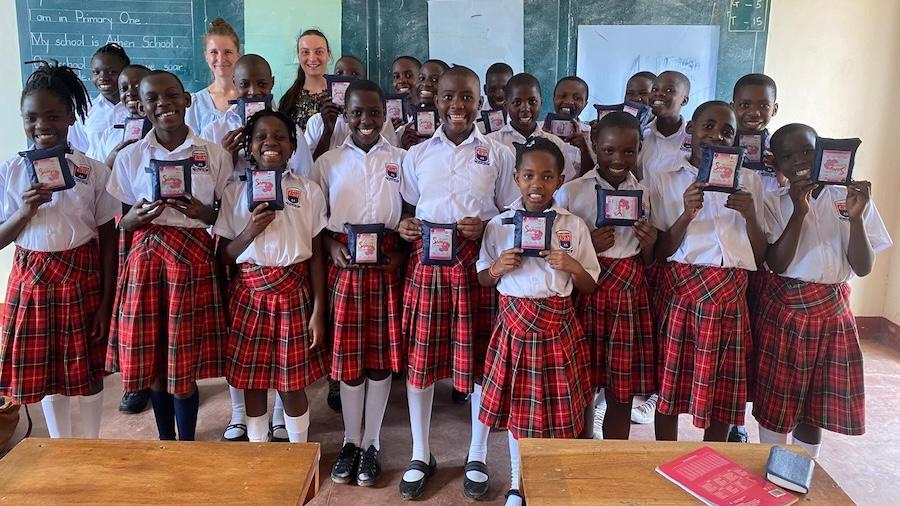

Health Education in Uganda: The girls receive washable hygiene kits.

They often end up missing school on the days they have their period, miss a lot of class, and eventually stop going to school because they’ve fallen so far behind. And that’s exactly where Patenschaft+ comes in.

We don’t just want to help children attend school; we also want to help ensure they stay in school. That’s why, through Patenschaft+, we visit schools, provide education about sexuality and menstruation, encourage the girls, and are there to listen to their questions.

In addition, every girl receives a washable hygiene kit so she can go to school even when she has her period.

Through outreach programs in villages and schools, you aim to reach people directly in their communities. What needs do you encounter most frequently in this work?

The average age in Uganda is about 15 years. This means there are an extremely large number of young people with limited prospects for the future and few opportunities in the job market. This is already having an impact on the situation in schools. The pressure on students is enormous. Even in kindergarten, children learn to read and write, take tests, and receive report cards. Great emphasis is placed on academic performance. 

What does sustainable aid mean to you in a country facing poverty, unemployment, and limited access to education and health care?

That is a very important question, and it is also the reason why we founded Yeshanah Mission. “Simply giving money” is not the solution to the problem; in fact, it makes it worse. We do not want to make people dependent; rather, we want to help them become self-reliant.

For children, it all starts with education. So many children don’t have the opportunity to go to school or learn to read and write. Education can help break the cycle of poverty.

Equipping parents with the skills they need so that they can eventually become capable of providing for their families again is the most sustainable form of assistance.

How does the MT:28 organization help you put your ideas into practice?

MT:28 is our guide in all areas. With their wealth of experience gained from working with missionaries around the world, they support us with advice and practical assistance. MT:28 also supports us by managing donations, ensuring that they reach their intended recipients.

One year later—What projects were you able to carry out with the donation from pme Familienservice ?

This year, thanks to the wonderful support from pme Familienservice , we were able to distribute 549 washable hygiene kits during our outreach efforts and also train 7 women to sew their own hygiene kits.

In addition, we have a major project planned for October in western Uganda, where we will visit two schools—each with 80 female students—and provide them with hygiene kits. We will also train 11 more women to sew hygiene kits.
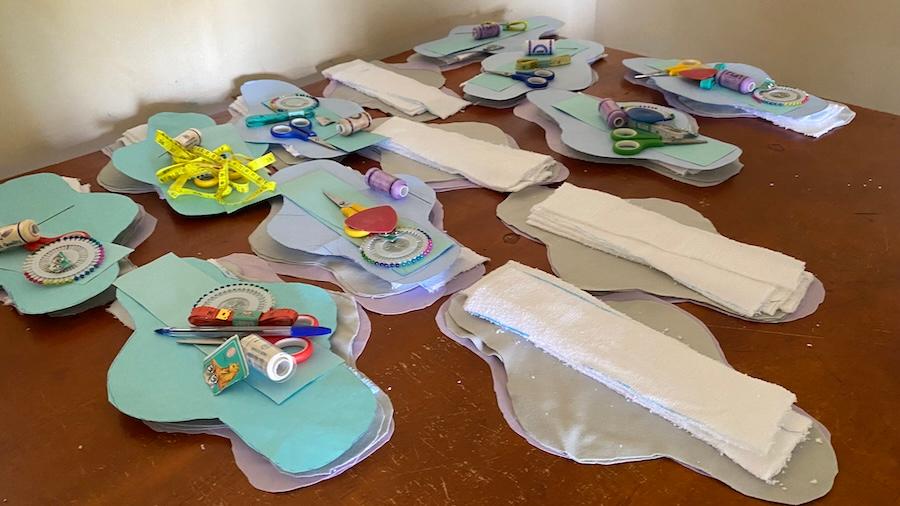

Women are being taught how to sew their own hygiene products.

For more information about the "Patenschaft+" project, visit the organization's website: MT:28.

Social commitment of the pme Familienservice

The "pme donates" fundraising campaign has been running for five years, giving pme team members the opportunity to nominate charitable organizations in the fields of "international development aid," "social work," "climate and animal protection," and "culture" for a donation that they actively support. All team members then vote on the organizations they want to support. The organizations with the most votes receive a donation from pme Familienservice.

In 2025, five national and international organizations received a total of €50,000 in donations—a joint demonstration that social engagement is an integral part of pme's corporate culture.


zero What makes a good team?

four people in blue overalls posing
Leadership & HR

What makes a good team?

Why do some teams perform effortlessly while others tread water? pme Academy Director Darina Doubravova explains why looking at the big picture is crucial. Discover the four most important levers and practical tips for immediate cohesion and success. 


What does a systemic approach mean for teams?

Does this sound familiar? A team full of talented, committed professionals, but the results are lacking. The atmosphere is tense, projects come to nothing. It's tempting to look for the cause in individual people, but that's usually not enough. A recent McKinsey study debunks the myth that talent alone is enough. The real cause rarely lies with individual members. It lies in the system. Darina Doubravova, head of the pme Academy, guides you through the key factors that turn a group of lone wolves into a real dream team.

"A team made up of 'superstars' isn't inherently a great team—in fact, it can lead to poorer performance."McKinsey, When teams get healthier, the whole organization benefits

The first and most important step toward improvement is a shift in perspective. Teams should not be viewed as isolated islands, but rather as part of a dynamic organizational ecosystem. “Neither individual team members nor teams can be viewed in isolation. They are always part of a complex ecosystem in constant interaction with other teams and the dynamics of the entire organization,” explains Darina Doubravova, Director of the pme Academy.

This holistic perspective is crucial for truly understanding and sustainably improving collaboration within the company.

That is why she recommends that every team make a conscious effort to engage with other teams and ask open-ended questions such as: “What are your actual expectations of us? How do you perceive our tasks and contributions?” Throughthis dialogue, both sides can reveal, align, and, if necessary, adjust their perspectives—a process that, as a genuine shift in perspective, fosters mutual understanding. Only when a team recognizes and actively shapes this systemic context can it realize its full potential and truly contribute effectively to overall success.

"I've noticed in many companies that departments often complain about a lack of appreciation from others. But it's always worth taking a self-critical look: How do I actually view the work of other teams?" says Darina Doubravova. "When teams look beyond their own horizons and take the broader context into account, the result is not only greater appreciation but also better collaboration."

"This is how a good working relationship becomes a true factor in the company's success."Appreciation is not a one-way street; rather, it arises only through mutual exchange and understanding.

Five Key Factors for Successful Team Performance 

Research shows that a team’s success is no accident, but rather stems from specific, learnable behaviors. Studies demonstrate that it is not random factors or the team’s composition alone that make a team successful, but rather principles that are consciously applied in day-to-day work.

"Our research shows that four drivers in particular have the greatest impact: trust, communication, innovative thinking, and decision-making."McKinsey, When teams get healthier, the whole organization benefits 

1. Trust & Psychological Safety: The Foundation 

Without trust, nothing works. It is the foundation that allows team members to take risks, speak their minds openly, and admit to mistakes. Only in an environment where trust prevails can employees freely express their ideas, ask questions, and even voice uncertainties or doubts without fear of negative consequences. This creates an environment where collaborative learning and continuous improvement become possible.

Recent studies show that teams with a strong culture of trust perform significantly better. According to a study by the consulting firm McKinsey, such teams areupto 3.3 times more productive than teams with lower levels of trust. They achieve better results, make decisions more quickly, and deal with challenges more creatively.

In addition, sick leave and employee turnover decrease because employees feel heard and valued. In short: Trust is the foundation for innovation, collaboration, and sustainable success in every team.


Practical tips for immediate implementation: 

  • Personal check-ins: Start team meetings with a brief round of personal updates. This creates an open atmosphere where everyone feels like part of the team and trust can grow.
  • Mistakes as learning opportunities:Foster a culture where mistakes are openly discussed and reflected upon together. This strengthens mutual trust and enables innovative teamwork.
  • Demonstrate reliability:Consistently followthrough on agreements and proactively keep your team informed about changes or challenges. This demonstrates reliability and helps build a strong relationship of trust. 

Our research found that teams that scored above average on trust were 3.3 times more efficient and 5.1 times more likely to deliver results than teams with below-average trust.
McKinsey, When teams get healthier, the whole organization benefits 

2. Open communication & feedback: The driving force 

Clear, open, and appreciative communication is the engine that drives the team forward and resolves conflicts before they escalate. Only when all team members know how to talk to each other and give feedback can a trusting atmosphere and productive collaboration develop.

Practical tips for immediate implementation: 

  • Establish rules for communication: Work with your team to establish binding rules for communication. For example, determine which communication tool (e.g., email, chat, face-to-face conversations) is used in which situation and who needs to be informed about important issues. This will help you avoid misunderstandings and ensure clarity.
  • Introduce feedback routines: Establish regular feedback rounds, for example, using the simple and effective 5-finger feedback method.This gives all team members the opportunity to express praise and suggestions for improvement in a constructive manner and to continuously work on their collaboration.
  • Active listening:Practice genuine, appreciative listening. Show your conversation partner that you really want to understand what they mean by asking questions and repeating what they say. This promotes mutual respect and facilitates communication within the team.

Work on your attitude toward feedback: Constructive feedback is a gift and opens up opportunities for improvement.
Darina Doubravova, Director of the pme Academy 

This YouTube content can only be loaded if you accept the privacy policy of Google LLC.

To the data protection settings "

3. Innovative thinking & diversity: The fuel 

Teams that are open to new ideas and value different perspectives are demonstrably more creative, flexible, and better prepared for change. Diversity brings fresh approaches to solutions, promotes innovation, and increases competitiveness. It is crucial that every team member can contribute their strengths and experiences.

Practical tips for immediate implementation: 

  • Create space for creativity: Block out regular times in your calendar for joint brainstorming sessions. Encourage your team to openly express all their ideas during these sessions—without immediate evaluation or criticism. This will give rise to new approaches and creative solutions.
  • Consciously leverage diversity:Encourage exchange between team members with different professional and personal backgrounds. Specifically ask for different perspectives and show appreciation for different opinions. This will allow you to benefit from the entire wealth of experience your team has to offer.
  • Encourage experimentation: Create a team culture where trying new things and “making mistakes” are actively encouraged. Encourage your employees to launch small experiments or pilot projects. Celebrate learning progress together—regardless of whether the experiment was immediately successful.

​​​​
 

4. Clear decision-making: The steering wheel 

Unclear decision-making processes quickly lead to frustration and paralyze collaboration. Efficient teams, on the other hand, know exactly who makes decisions in which situations and how. This means that decisions are made quickly, everyone involved pulls together, and the team remains capable of acting.

Practical tips for immediate implementation: 

  • Clarify roles: Create clarity within the team by jointly determining who is responsible for which decisions, who provides advice, who makes suggestions, and who ultimately implements them. This transparency provides orientation and increases efficiency.
  • Quality over perfection: Make decisions quickly . Encourage the team to make decisions quickly based on the information available, rather than endlessly searching for the perfect solution. A pragmatic approach saves time and allows for immediate action.
  • Learn from mistakes: Take time regularly to reflect on decisions—especially when the desired result is not achieved. Analyze the causes together without assigning blame. This way, everyone benefits from shared experience and knowledge and continues to develop as a team.

"It's not just about defining clear roles within the team, but also about considering the expectations placed on individual team members from outside the team. The issue of 'breaking down silos' is also becoming increasingly important.
Darina Doubravova, Director of the pme Academy"  


5. Sustainability and the outside perspective 

Self-reflection is good, but looking inward is often not enough. Teams quickly develop blind spots when it comes to their own weaknesses. Leaders often view the situation more positively than the rest of the team. An outside perspective can be crucial for identifying the real areas that need improvement.

External team development is particularly useful when a new team is forming, major changes are on the horizon, or conflicts are hindering collaboration. An external coach can help identify entrenched patterns and show the team new ways forward. 

Teams are often unaware of their most significant gaps and may share blind spots, leading them to prioritize the wrong things.
McKinsey, When teams get healthier, the whole organization benefits

Conclusion

A high-performing team is the result of a continuous process that begins with understanding the big picture. By recognizing their role in the organizational ecosystem and actively working on the pillars of trust, communication, innovation, and decision-making, teams lay the foundation for sustainable success. 

FAQ: Improving team performance 

What makes a good team?

Successful teams are characterized by mutual trust, open communication, diverse perspectives, and clear decision-making. Shared goals, respectful interactions, and a constructive approach to handling mistakes are further keys to success.

How can trust be built within a team?

Trust is built through transparent communication, reliability, and an open culture of accountability. Regular one-on-one conversations, genuine appreciation, and keeping one’s promises foster mutual trust within the team.

What promotes effective communication within a team?

Clear communication, active listening, and respectful interaction are essential. Feedback should be provided regularly and constructively. Shared guidelines for using communication channels help prevent misunderstandings.

What is meant by a systemic approach?

The systemic approach views teams as part of a larger organizational system. It focuses on the relationships and interactions among team members. The goal is to identify patterns in how they interact with one another and thereby foster respectful, solution-oriented collaboration.

What can help resolve conflicts within a team?

Conflicts should be addressed early on. Open, respectful discussions and neutral facilitation help in finding solutions. It is important to view conflicts as an opportunity for growth rather than assigning blame.

When should external team development be used?

External team development is recommended in cases of recurring conflicts, major changes within the team, or when the goal is to improve collaboration over the long term. An impartial outside perspective can help break through entrenched patterns.

Further links

McKinsey Quarterly: "Go, teams: When teams get healthier, the whole organization benefits"
October 31, 2024