

My home, your home - our child
Where should the child live after separation? The alternating model is now getting a tailwind from politicians.
Author: Annemarie Gerzer-Sass
Where should the child live after the separation? The alternating custody model is now gaining political momentum.
Where should the child live after the separation? For many parents, this is a central issue that is sometimes the subject of tough negotiations—often in court. An initiative by Federal Minister for Family Affairs Katarina Barley to support the so-called “shared custody model” could now lead to a paradigm shift. As early as February 2017, the Federal Court of Justice (BGH) ruled that there was no reason why family courts should not order a “shared custody arrangement” and enforce it even against the will of the other parent (usually the mother) if this shared care best serves the child’s best interests.
Best interests of the child versus traditional roles
The ruling is an invitation to parents as well as family courts and institutions to put the child at the center of their decision-making. It touches on various aspects: The welfare of the child as an independent subject is central. The older the child gets, the more important its own wishes and ideas about how and where it wants to live become. The "residence model" that has been used in the majority of cases to date (90%), in which the child lives with the mother, for example, and is only with the father every other weekend, follows the traditional distribution of roles. The mothers are responsible for the children, the fathers are the breadwinners of the family and are not allotted the same amount of time for childcare. This no longer corresponds to reality, because more fathers today want to be involved in bringing up their children and mothers no longer want to cut back on their careers to the same extent as in the past. More than half of divorcing parents (51%) wish to continue living together with their child on a daily basis (Allensbach study), even if they live in different places.
Hurdles of the alternating model
However, reality also shows that only 22 percent are able to put this desire into practice. There are various reasons for this:
The separation or divorce phase is not the best time to negotiate agreements and compromises: without help, reaching a compromise is often difficult. This is where mediation and counseling are needed so that parents can fulfill their parental roles in the best interests of the child despite the ended partnership. Couples must constantly work on shared responsibility and rebuilding trust. Anyone who believes that divorce means they have “dumped” their partner is mistaken: shared parenting is a lifelong commitment and must be worked on according to the child’s stage of development.
Parents fear that children might feel uprooted by the alternating custody model: These fears are not borne out in practice, provided the alternating custody model is designed with the child’s best interests in mind. A study by the German Youth Institute shows that children—not just older ones—usually adapt very well to living in two parental homes, and that this has a positive effect on their development. What matters most is how parents interact with their children, not where this takes place. For the alternating custody arrangement to succeed, it is important that the parents’ residences are not far apart and that the transition is structured flexibly as the children get older, according to the recommendation of Prof. Dr. Jörg Maiwald, Executive Director of the German League for the Child. However, the alternating custody model is not suitable for every child, which is why the child’s wishes must be assessed and taken into account in an age-appropriate manner. If both parents have been caring for the child up to this point, this should remain possible in order to maintain and further develop the bonds that have been formed.
Not every family can afford the alternating model
All too often, the best intentions fail due to scarce and expensive living space in larger cities, logistical challenges or the working hours and demands of mothers and fathers. These hurdles need to be overcome with the help of family policy. In particular, companies need a push for equal opportunities for fathers in terms of flexible working hours and parental leave, as well as a change in management culture: managers are still not sufficiently aware that taking responsibility for their families does not mean a loss of skills, but rather a gain in skills for the company.
Sweden sets a good example: less conflict, more equality
In Sweden, a third of all children from separated and divorced families already live according to the alternation model. Here it can be seen that this also has an impact on how the separated partners interact with each other. The alternating model expert Hildegund Sünderhauf-Kravets, lawyer for family law and professor of law at the Protestant University of Applied Sciences in Nuremberg, assumes that the alternating model will also become established in Germany in the next 20 years.
She sees this as an opportunity for a more peaceful and cooperative approach to separation and divorce, as parents no longer have to fight over children. If care time is shared equally, maintenance disputes are also eliminated, as both parents can fulfill their care and maintenance obligations at the same time. The paradigm shift could therefore take place on various levels: In the organization of separation and divorce within the couple relationship, in the question of equal rights for fathers in childcare, in role models within institutions and, above all, in the world of work, which enables mothers and fathers to provide adequate care for their children.
Sources:
Hildegund Sünderhauf: “Alternating Custody: Psychology, Law, and Practice: Shared Child Care by Parents After Separation and Divorce” Springer VS ISBN 978-531-1909-8 (eBook).
Allensbach Institute for Public Opinion Research: Future discussion "Parenting separately together" July 11, 2017 in: Newsletter of the BMFSFJ No. 66/ Issue of 08.08.2017 - Core results of a survey of separating parents.
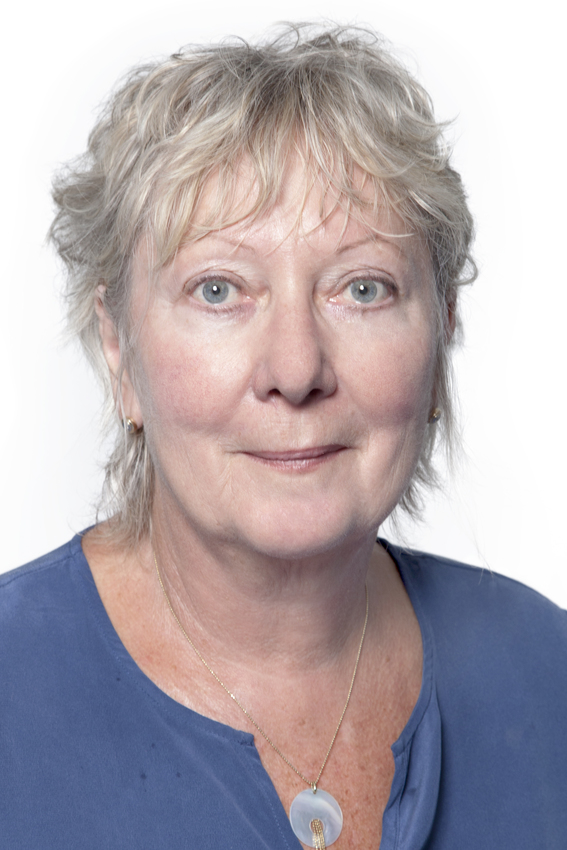 About the author:
Annemarie Gerzer-Sass worked for many years as a family researcher at the German Youth Institute. For ten years, she managed the "Multigenerational Houses" project for the Federal Ministry for Family Affairs, Senior Citizens, Women and Youth (BMFSFJ), for which the pme Familienservice Group acted as a service agency. Today, our long-time employee is "unretired" and writes for our blog, among other things.
Maternity protection, child benefit & co.: The pme parent advice service
Our parent counselors support parents in all matters from pregnancy to the child's adulthood. Personal and confidential: we are there for you online, by phone or on site.