

Episode 44: Men's health over 50
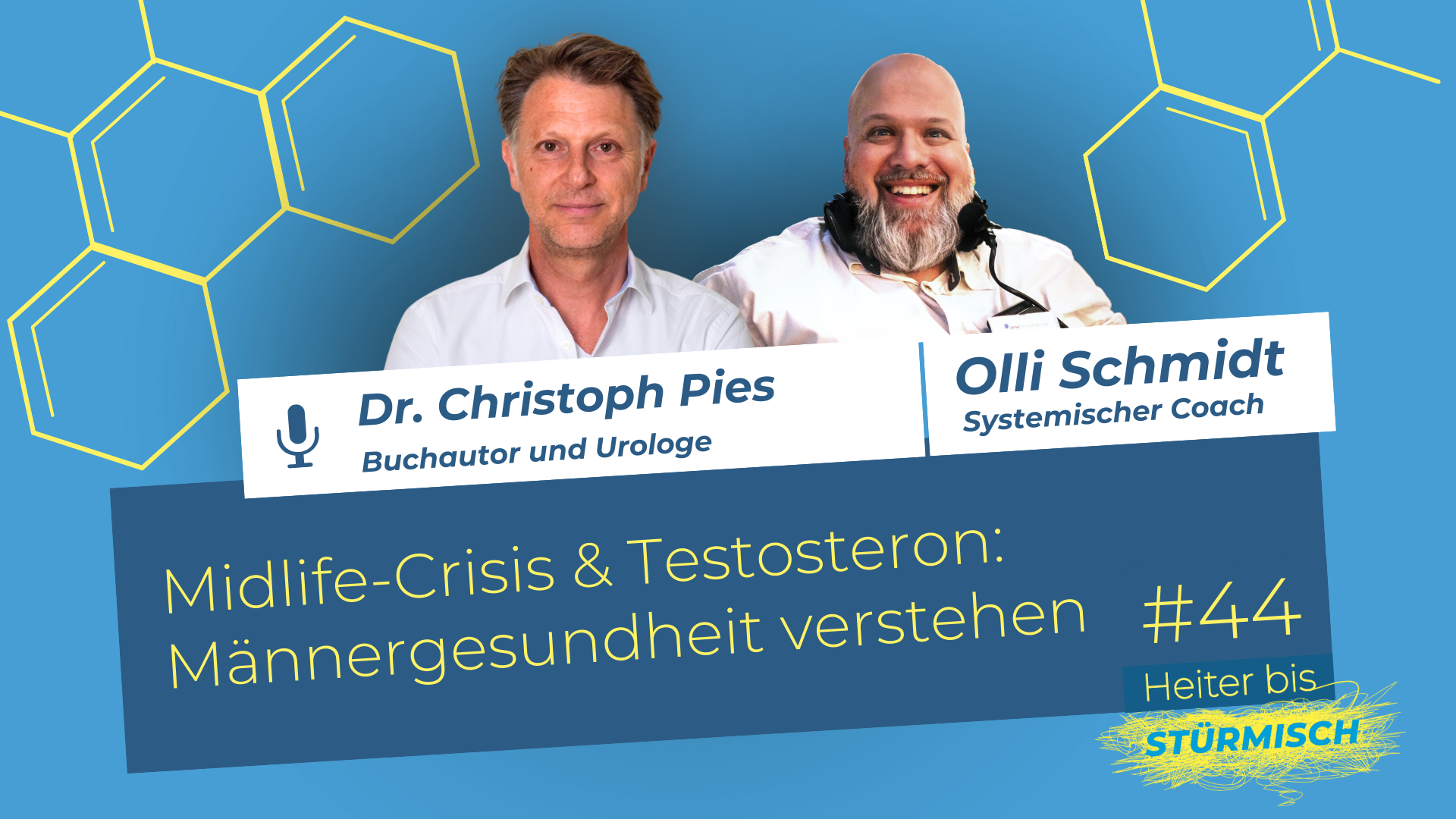
In the new episode of "Heiter bis stürmisch" (Cheerful to Stormy), Oliver Schmidt talks to Dr. Christoph Pies, urologist and author. He shares honest insights into men's health after the age of 50. He speaks openly about physical and psychological changes, dispels myths about "male menopause," and gives practical tips on how men can master this phase of life with confidence and health.
This letscast.fm content can only be loaded if you accept the privacy policy of letscast.fm.
To the data protection settings "In this episode, you will learn:
- Why does men's health start at 30 and not become relevant until 50?
- Male menopause: myth or reality?
- Testosterone deficiency: When is treatment advisable?
- Mental challenges and dealing with the midlife crisis.
- What role do partnership and communication play in fulfilling sexuality?
- Why are preventive medical checkups so important for men, yet often neglected?
- How can a healthy lifestyle and social networks empower men?
Dr. Christoph Pies gives practical tips on how men can take a holistic view of their health—physically, mentally, and socially. He shows how important mindfulness, self-acceptance, and small changes in everyday life are for finding new joy in life even after the age of 50.
Read an excerpt from the podcast here as an interview:
What made you take such a keen interest in men's health over 50?
Dr. Christoph Pies: Of course, there is also a lot of self-interest behind it. I started looking into this when I was approaching 50 and noticing physical and professional changes. As a urologist and author, I broadened my scope and began to focus more on men's health and what is known as "male menopause."
My aim is to take a holistic view of the processes that take place on a physical and psychological level. Medicine is often highly specialized and only looks at small aspects, but men's health requires a broad overview in order to better understand and manage the decline in many functions in middle age.
Many men immediately think of decline and deficit when they reach 50. What is the mistake in this thinking?
Dr. Christoph Pies: The misconception lies in the lack of acceptance of aging. We humans are subject to a biological process in which bodily functions decline over time. But aging is also a maturing process that brings new opportunities and possibilities. This adjustment and reorientation is sometimes overlooked. Perspective makes a big difference here: it's not just about loss, but also about development and new areas of life.
Is there such a thing as male menopause?
Dr. Christoph Pies: Not in the traditional sense. Unlike women, who experience a clear menopausal phase, the decline in men is more linear and begins around the age of 30 or 35 with an annual decline in certain functions. For example, kidney function declines continuously.
This often leads to a subjective perception of deterioration, which is dramatized. Only when the tipping point is reached, usually around the age of 50, do symptoms arise that can be associated with a midlife crisis. Testosterone deficiency with symptoms actually affects only about 4 to 5 percent of men over the age of 60.
When is testosterone treatment advisable?
Dr. Christoph Pies: If you have physical, psychological, and sexual symptoms and laboratory tests confirm a testosterone deficiency, you can consider hormone replacement therapy. However, this should not be the first step. It is much more important to change your lifestyle—exercise, diet, sleep, stress management. "Repair" through hormone replacement alone is not enough, as the causes are often complex and a healthy lifestyle can achieve a lot.
Our "HisHealth" lecture series focuses on men's health. It provides numerous practical tips and fosters an open discussion on topics ranging from mental load and nutrition to emotions, gender roles, and psychosocial challenges.
You can find all scheduled events at: pme.link/hishealth26
How can you tell whether you are just going through a phase or need medical help?
Dr. Christoph Pies: From the age of 45 onwards, preventive medical checkups are a good idea. You should have the courage to openly discuss any symptoms with your doctor. A trusting conversation is the first step toward assessing the situation together.
It is also helpful in your private life to notice changes and talk about them. If symptoms such as persistent exhaustion, irritability, or withdrawal persist for weeks, you should take notice and seek help.
What happens when performance identity is lost due to age or illness?
Dr. Christoph Pies: This often leads to an identity crisis. Many men define themselves strongly through their work and performance. When this role disappears, the question arises: What remains of me? This can lead to frustration, cynicism, and exhaustion.
It is important to view your personality holistically, discover new facets, and not define yourself solely by your profession. This is a challenging but also valuable process.
How does sexuality change after the age of 50?
Dr. Christoph Pies: The performance orientation that many men are familiar with from their careers is often transferred to sexuality. With declining bodily functions and testosterone levels, frustration sets in because expectations are no longer being met.
Sexuality should focus more on closeness, relationships, and mutual understanding. Sexual intercourse is only one aspect; more important are emotional connection and communication about needs.
What role does the social environment play?
Dr. Christoph Pies: Your social environment plays a huge, often underestimated role. Friendships and partnerships provide support and can help you recognize changes. Especially in times of crisis, you realize how important a supportive network is.
Advice usually doesn't work; it's better to inspire by setting an example and being patient with each other. Even difficult conversations can be possible in genuine friendships.
What is needed to encourage men to attend preventive health checkups?
Dr. Christoph Pies: You should learn to take care of your health early on. Preventive care is not a sign of weakness, but of responsibility for yourself. Unfortunately, many men lack this awareness because, unlike women, they are not accustomed to regular visits to the doctor from an early age. In addition, office hours are often not tailored to working people, which makes preventive care difficult. A rethink in society and the healthcare system is necessary.
What advice would you give to men who feel like they're stuck in a rut?
Dr. Christoph Pies: Congratulations on recognizing the need for change. This is not a failure, but a turning point. Change is always possible, but it takes time and small, sustainable steps. A healthy lifestyle with exercise, a healthy diet, sufficient sleep, and time for regeneration is the key. Discipline and foresight are important, but at the same time, change should be relaxed and long-term.
Cheerful to stormy - the everyday podcast with Olli Schmidt
Welcome to "Heiter bis stürmisch" - the everyday podcast. Cheerful or saddened to death: life has its ups and downs. That's what we're all about: everyday crises such as arguments with your partner, parenting issues, work overload, insecurities and anxiety. We talk to experts and give you practical tips to help you deal better with crises and challenges.
You can listen to our podcast on all known podcast platforms (Spotify, Apple Music, Audible etc.)! Questions, suggestions, criticism, requests? Feel free to write to us at: familienservice