

The Team Cycle According to Tuckman
Team Clock: The 5-Phase Model of Team Development, Simply Explained
Teams don’t just appear out of thin air; they grow—and they do so in five phases that every team goes through, whether it wants to or not. First comes the getting-to-know-each-other phase, then the storm: conflicts, power struggles, friction. Anyone who thinks this is a sign of failure is mistaken—it’s the price of truly growing together. Tuckman’s team cycle shows why “storming” isn’t a warning sign but a necessary step, and how teams can reach peak performance from there. And in the end? Even saying goodbye needs to be handled thoughtfully.
In a nutshell
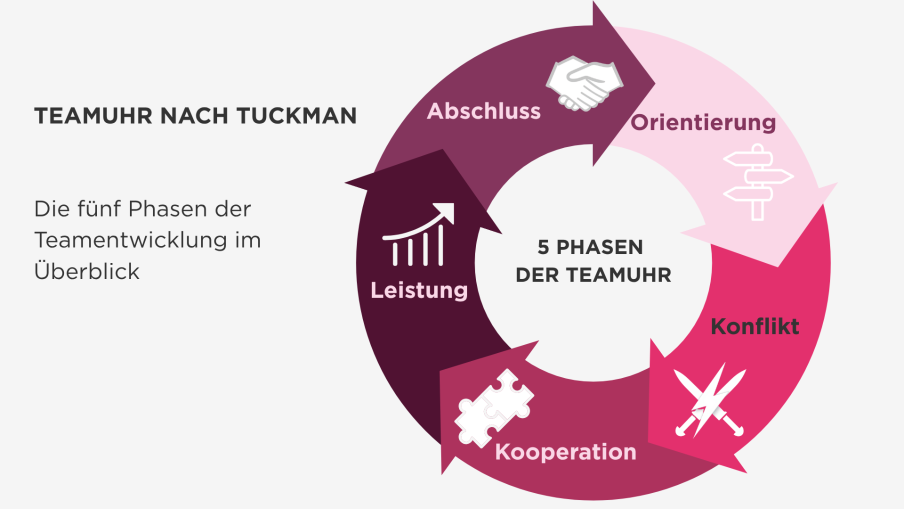
The team cycle, developed by American psychologist Bruce Wayne Tuckman (1938–2026), is a phased model of team development consisting of five stages: Forming (orientation), Storming (conflict), Norming (cooperation), Performing (performance), and Adjourning (conclusion). The model helps leaders and teams recognize the natural stages of group development, understand typical challenges, and take appropriate action.
How was the team watch created?
Tuckman developed the model in 1965 to describe group development. His basic assumption: Conflicts and friction are not signs of failure, but rather a normal stage of development on the path to becoming a productive unit.
An Overview of the 5 Phases of the Team Clock
The original model consisted of four phases: Forming, Storming, Norming, and Performing. It was quickly accepted in practice and later expanded to include a fifth phase—Adjourning, also known as the “Mourning” phase—which describes the deliberate dissolution or restructuring of a team. This final phase deserves special attention, particularly in organizations with time-limited projects or changing teams.
- Forming – Getting to Know Each Other and Finding One’s Bearings: The group is coming together. Politeness, uncertainty, and looking to the leader for guidance are the main focus. Typical questions: “What is my role?” “What is expected of me here?”
- Storming – Conflicts and Power Struggles: Differences come to the fore, and issues of power and needs become apparent. Conflicts, resistance, and competition for influence or resources arise.
- Norming – Defining Roles and Structure: Common rules, roles, and processes are established. A sense of unity grows, and cooperation and trust increase.
- Performing – Productive Collaboration: The team works independently, constructively, and in a goal-oriented manner. Roles are clearly defined, and conflicts can be addressed in a professional manner.
- Adjourning – Farewells and Reflection: Projects come to an end, and teams disband or undergo changes. Farewells, pride, and uncertainty all play a role. Deliberate closures help to preserve experiences and ensure smooth transitions.
What defines a team at each stage? Here's how to figure out where you stand
In practice—whether in " childcare center" teams, consulting teams, project groups, or leadership circles—the Team Clock offers three key opportunities:
- Self-reflection: Where do we stand right now? How do we communicate and interact with one another? How do we give feedback?
- Expectation Management: Leaders recognize that conflicts during the storming phase are normal—and not a personal failure. Key questions: What are our goals? What are our roles and responsibilities?
- Appropriate interventions: Depending on the phase, a team needs different things—guidance and security (Forming), clear facilitation of conflicts (Storming), space for reaching agreements (Norming), trust and autonomy (Performing), and deliberate closure (Adjourning).
Another point a team needs to clarify: the GRPI model
In addition to the phase logic of the team clock, each team must clarify its goals and roles, as well as how processes are structured and how personal collaboration is organized. This interplay is described by the GRPI model—we plan to publish a separate, in-depth article on this topic, which will be linked here as soon as it is published.
Why the Team Clock Is Helpful in Day-to-Day Leadership
Those who understand the natural dynamics of their team can lead with greater composure, provide more targeted guidance, and make more realistic assessments of what to expect from a team. Recognizing that conflicts and realignments are natural parts of development makes teams more stable, more effective, and more resilient.
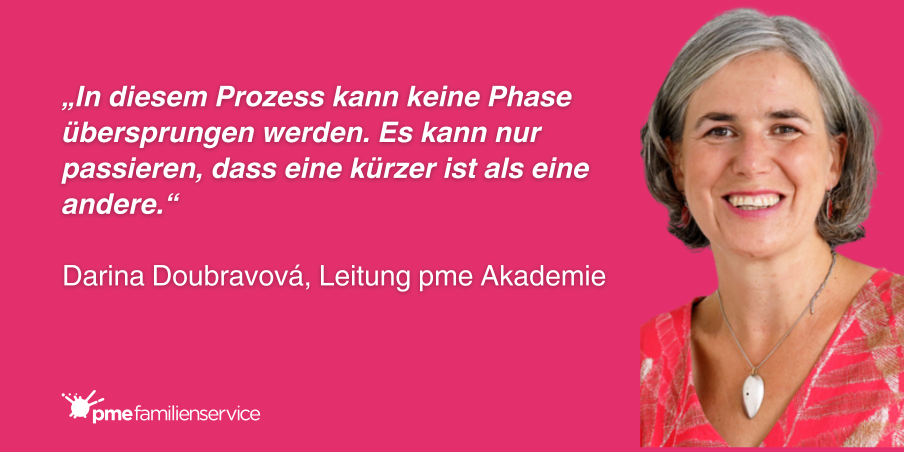
"When starting new projects or teams, it's important to take the time to make these processes visible, to be mindful of the dynamics, to negotiate roles, and to define goals." Darina Doubravova, Head of the Central Academy, pme Familienservice
According to Tuckman, the team clock thus becomes a practical tool for navigation: It doesn’t explain everything, but it helps us better understand team dynamics—and thus shape them more consciously.
Frequently Asked Questions About the Team Watch (FAQ)
What stages does a team go through according to the Tuckman model?
According to Tuckman, a team goes through five phases: Forming (orientation), Storming (conflict), Norming (cooperation), Performing (performance), and Adjourning (conclusion). Each phase is necessary—phases may vary in length, but they cannot be skipped.
What does "storming" mean in team development?
Storming is the second phase of the team development cycle, during which conflicts, power issues, and differing needs within the team come to the surface. It is a normal, necessary step in the development process and not a sign of failed collaboration.
Why was a fifth phase added to the team clock?
The original four phases were expanded to include “Ajourning” because the deliberate dissolution or restructuring of a team is also an important process that influences how employees begin working in new configurations.
How long does a phase of the team clock last?
There is no set duration—the length of each phase depends on the team, the task, and the external conditions. It is crucial that no phase be skipped entirely.
What is the difference between the Team Watch and the GRPI model?
The Team Clock describes a team's development over time in phases. The GRPI model outlines the key areas a team must address: goals, roles, processes, and collaboration. The two models complement each other.
The Work:Life Academy at pme Familienservice offers a wide range of seminars and training programs for companies focused on leadership development and employee development.
Whether in-person, online, or as blended learning or blended coaching—we flexibly tailor our seminars and training sessions to the needs of your teams and leaders.
Systemic, solution-oriented, and practical:Work:Life Academy

.jpg/499b32b2-7da0-c8dd-12d3-208b04766e58/499b32b2-7da0-c8dd-12d3-208b04766e58?imageThumbnail=2)