


Sugar-free diet: 6 tips for conscious consumption
It’s hard to imagine our modern diet without sugar. It’s hidden in more than 80 percent of all foods—not just in obvious sweets, but also in products like sausage and bread. Being aware of these hidden sugars is the first step toward making more conscious choices and sustainably reducing your consumption. In this article, you’ll learn how to identify sugar in your daily life, reduce your intake, and still enjoy life to the fullest.
(Expert: Giannina Schmelling, nutritionist | Editor: Christin Müller)
Table of contents
- Sugar and Health: Why Too Much Sugar Is Bad for Your Body
- Why doesis sugar addictive?
- An Overview of Types of Sugar: How to Spot Hidden Sugar
- Sugar Alternatives: What Really Works—and What Doesn't
- How can I eat as sugar-free as possible?
- Emotional Eating: How Emotions Influence Our Sugar Intake
- An exercise for when you're craving sugar: a simple reflection process
- Cutting Back on Sugar for the Long Term: How to Stay on Track
- How do you stay on track in the long term?
Sugar and Health: Why Too Much Sugar Is Bad for Your Body
High sugar consumption is associated with numerous health risks. For example, it causes blood sugar levels to rise rapidly, which results in a sharp increase in insulin secretion. This blocks fat burning and makes losing weight almost impossible.
At the same time, constant fluctuations in blood sugar levels promote food cravings, fatigue, and, in the long term, diseases such as diabetes, cardiovascular problems, chronic inflammation, and disturbances in the gut microbiome.
Recent studies on sugar consumption show that high blood sugar levels can actually damage the blood vessels in the brain—which can be a risk factor for vascular dementia. In addition, memory function suffers because sugar weakens neural plasticity and the hippocampus.
Why sugar is addictive
Sugar not only affects physical health, but can also be addictive. "Sugar addiction" may not be an official term, but it accurately describes what many people experience.
Sugar triggers the release of dopamine, the happiness hormone, which acts directly on the reward center of the brain. This leads to a feeling of elation and makes us feel satisfied.
From an evolutionary perspective, this makes sense: Sugar provides quick energy, which used to be essential for survival and less readily available. Today, things are different; we have plenty of energy available in the form of food—anytime, anywhere. But our brains haven’t caught up yet and continue to “reward” us with a rush of euphoria whenever we consume sugary foods and thus get a quick burst of energy.
The problem is that the more sugar we eat, the more the brain gets used to it and demands higher and higher amounts to achieve the same effect.
The good news is: Our brains are adaptable. If we cut back on sugar and change our habits, our reward system will gradually adjust as well.
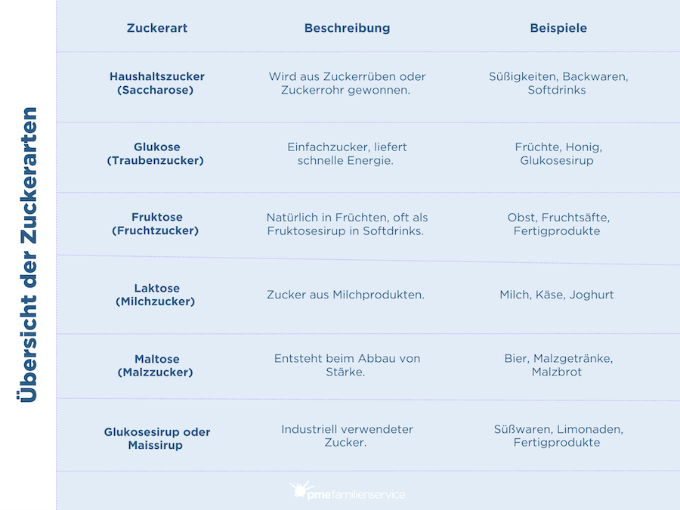
An Overview of Types of Sugar: How to Spot Hidden Sugar
The various sugar works at a glance:
Sugar Alternatives: What Really Works—and What Doesn't
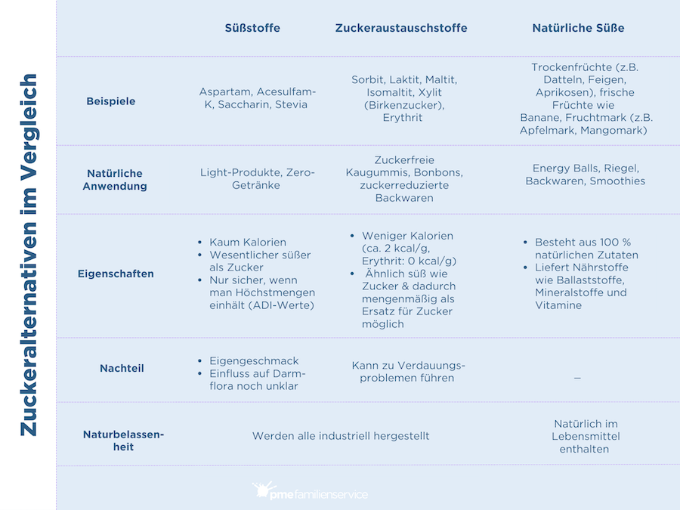
Many supposedly healthy alternatives such as honey, agave syrup, maple syrup or coconut blossom sugar are also simply sugar. Sugar substitutes such as birch sugar and sweeteners such as stevia can also be a helpful alternative in the short term, but are not a long-term solution.
Why sugar substitutes and sweeteners are only partially effective
Sugar substitutes should therefore be avoided, especially if you have digestive issues such as bloating, stomach pain, or diarrhea. This is because they can quickly have a laxative effect, which is why foods containing sugar substitutes must carry the warning: “May have a laxative effect if consumed in excess.” In addition, sweeteners are suspected of negatively affecting thegut microbiome. Furthermore, sugar alternatives increase or maintain sweetness tolerance, which in the long term fuels the desire for increasingly sweeter foods.The result: the craving for sweets is repeatedly intensified.
For some people—such as those with diabetes —sweeteners can be a temporary solution to avoid blood sugar spikes. For most people, however, the less their taste buds get used to very sweet foods, the easier it is to cut down on sugar overall.
Sugar alternatives in comparison: sweeteners, sugar substitutes and natural sweeteners
How can I eat as sugar-free as possible?
Many people find it helpful to simply stop buying sweets. After all, if it's not there, you can't eat it. In the long term, however, alternatives are important, because cozy evenings on the couch or frustrating meetings with the boss are bound to happen again.
So instead of storing chocolate bars in your office drawer and kitchen cupboard, fill them with tasty alternatives. Choose foods that are similar in taste and texture to your favorite sweets. A celery stick as a substitute for chocolate ice cream is less likely to be convincing.
The WHO recommends that no more than 10 percent of daily energy intake should come from free sugars. This includes added sugars as well as sugars found in honey, syrup, and fruit juices.
For adults, that amounts to about 50 grams of sugar per day.
Instead of relying on strict bans, it’s worth taking a closer look at your own relationship with sweets:
What role does sugar currently play in my life? And what need am I actually trying to satisfy by consuming sugar?
6 ways to reduce sugar
1.Energy balls or bars sweetened with dates, dark chocolate, dried fruit, or your favorite fruit
2. Savory snacks can also help: olives, nuts, edamame, hard-boiled eggs, or raw vegetables with hummus and guacamole.
3. Juices with 100% fruit content: Avoid nectars and fruit juice drinks that have added sugar. But be careful: 100% juice means a lot of fructose. You shouldn’t consume too much of this sugar either. It’s better to enjoy it mixed with water as a spritzer.
4. When baking , use dried fruit, bananas, or applesauce for sweetening.
5. Photo folder on your phone: When you find a great snack, take a picture of it right away and save it in your snack folder. That way, you'll have quick and healthy ideas ready for your next craving.
6.Bitter substances such as those found in dark chocolate or coffee can help curb your appetite.
Hit the drugstore! There are now numerous sugar-free alternatives to gummy bears, chocolate bars, and Nutella.
When buying "sugar-free" products, check the ingredient list: they often contain sweeteners or sugar substitutes. That’s fine if you can tolerate them—but it keeps training your taste buds to crave sweetness.
Emotional Eating: How Emotions Influence Our Sugar Intake
We often reach for sweets out of boredom, stress, loneliness, or joy. Sweets therefore help to regulate our emotions. For example, they suppress boredom and promote enjoyment.
If we simply cut out sweets, the underlying emotions come to the surface unfiltered and can overwhelm us.
One example of this is people who have undergone gastric bypass surgery: the reduction in the size of the stomach means that only very small meals can be eaten, which greatly reduces emotional regulation through eating. As a result, those affected often experience intense emotional outbursts and can burst into tears for seemingly no reason.
To reduce sugar in the long term, it is therefore not enough to simply cut it out. It requires consciously dealing with your feelings and finding healthy alternatives.

Exercise for sugar cravings: a simple reflection process
Craving something sweet? Try the following steps before reaching for the chocolate:
1. Before reaching for sweets, pause for a minute to check in with yourself.
2. Ask yourself: "Why do I want to eat right now? And what do I really need right now?"
3. Rejoice in the insights you have gained, your patience, and the conscious enjoyment. You have done a great job!
4. Find a suitable solution for things like stress, boredom, or the urge to seek rewards (e.g., a special tea in a nice cup, going for a walk, listening to your favorite song) OR consciously choose to enjoy the moment.
The exercise is not about denying yourself food! Rather, the focus is on getting to know yourself and your needs better and making a conscious decision instead of mindlessly stuffing yourself with sweets.
Cutting Back on Sugar for the Long Term: How to Stay on Track
It is difficult to give up sugar completely. Maybe it works for a week or even a whole month. But if we really want to do something good for ourselves and our bodies, the question is how we can stick to it in the long term.
The keyword is self-care and looking at the actual causes of sweet consumption.
Sugar reduction is not a punishment, but an act of self-care.
With small, conscious decisions and healthy alternatives, you can do your body and mind good in the long term. A lovingly prepared plate of fruit and vegetables will make you feel more appreciated than a torn open plastic bag of jelly babies.
Avoid black and white thinking
It doesn't have to be a complete ban on sugar, it's more about reducing and being mindful when eating sweet foods. Instead of strict prohibitions, mantras can help, such as: "I abstain because I want to be good to myself and be mindful of my needs."
Food Diary: Understanding Why You Reach for Sweets
Keeping a food diary helps you to better understand the reasons behind your eating habits.
By noting down your emotions, thoughts, and needs before and after eating, you can identify patterns and develop appropriate strategies.
For example, if I always eat when I'm stressed, I should of course tackle the stress and not the eating in the long term. That means learning to say "no," asking for help, or taking up a new hobby.
It's not about being perfect, but about treating yourself with love and creating positive changes step by step .
Sources:
1 Suez J, Korem T, Zeevi D et al. (2014) Artificial sweeteners induce glucose intolerance by altering the gut microbiota. Nature 514: 181–186
2 American Dietetic Association (2012) Position of the Academy of Nutrition and Dietetics: use of nutritive and nonnutritive sweeteners. J. Acad. Nutr. Diet 112: 739–758