

Media and children: tips against excessive consumption
Parent & Child

Media and children: tips against excessive consumption

"Just one more episode. Please!" Parents should show their children how to use digital media competently. This does not mean imposing strict bans every day, but setting clear rules and having open conversations with the children. But what is the best approach for me as a parent?

In summary: Finding balance is important.

Digital media are naturally part of children's everyday lives – but how much is too much? Many parents are plagued by uncertainty, and everyday life is often not always compatible with media rules. Pia Schulze-Zumkley advises Familienservice on media consumption at pme Familienservice . She emphasizes:
"The biggest challenge is finding the right balance – not too strict, but also not too lax. Media are simply part of life today. The most important thing is that parents should accompany their children when they use digital media!"

1. how much media time is healthy for my child?

Digital media accompany children and young people today from day one. According to the miniKIM study 2023, even two- to five-year-olds grow up in households where the internet (98 percent) and smartphones (95 percent) are available almost everywhere.
Around one-fifth regularly use a tablet, and one in ten toddlers even has access to their own smartphone.

The KIM study shows that 70 percent of six- to thirteen-year-olds already use the internet at least occasionally; this proportion grows rapidly with age: among ten- to eleven-year-olds, the figure is already 85 percent, and among twelve- to thirteen-year-olds, it is practically all (99 percent). Having one's own internet access is also becoming increasingly commonplace.

Almost all young people between the ages of twelve and nineteen (JIM Study 2024) own a smartphone, spend an average of more than three hours online every day, and use WhatsApp, YouTube, Instagram, and TikTok in particular. Music and video streaming as well as AI applications are now as much a part of everyday life as dealing with fake news and digital risks.


"The biggest challenge for parents is finding the right balance when it comes to digital media. It's not helpful to strictly forbid its use or allow it without any supervision. It is much more important to recognize that media are part of our everyday lives and to give children the space to experience them—but always with vigilant parental supervision and open communication about what happens online and offline."
Pia Schulze-Zumkley, parent counselor at pme Familienservice


There are recommendations on how long and how often children and adolescents should use screen media per day, depending on their age group:

  • Young children aged 0 to 3 should not have any set times for watching TV, using smartphones, tablets, or computers.
  • In the age group from 3 to 6 years , a shared usage time of 30 minutes is planned .
  • In the age group from 6 to 10 years, a maximum of 45 to 60 minutes.
  • For 10- to 13-year-olds, screen time should also be limited to around 60 minutes , although there is some room for negotiation in this age group.
  • Between the ages of 13 and 17, it is still advisable to agree on usage times in order to protect young people from excessive use.

Nevertheless, it is difficult to set guidelines as family and personal situations vary greatly. Young people should be regularly monitored for their well-being and whether they have enough time for school, training, hobbies and friends. 

"I find blanket bans on social media, for example, really difficult, because I see media education as comparable to road safety education. Of course, I could say: Instagram only from the age of 16, just as you can only get a driver's license from the age of 18. But how do I introduce my child to it? When riding in the car, children learn what traffic signs mean and what right of way is. That's exactly what I want for media.
That's why I'm not a fan of bans, but rather of supervised media use. In families that practice this, children really know how to use media sensibly and safely."
Pia Schulze-Zumkley, parent counselor at pme Familienservice


2. tips for relaxed cell phone use by your child

Carline Krügl, systemic consultant and coach, gives tips on how you can implement sensible cell phone use for your child in a relaxed manner.

This Vimeo content can only be loaded if you accept the privacy policy of Vimeo, LLC.

To the data protection settings "


3. corona pandemic has doubled media addiction among children and young people

As a distraction against stress, cabin fever and loneliness, digital media offered young people a variety of uses during the coronavirus pandemic.

However, the associated restrictions have led to increased media consumption. This is confirmed by the results of a study conducted by the statutory health insurance provider DAK in 2022.

According to the study, media addiction among children and young people has increased since 2019:

  • Around 2.2 million children and young people exhibit problematic usage behavior in relation to gaming, social media or streaming. This means that they are at risk of media addiction or are already addicted.
  • Around six percent of minors are addicted to computer games and social media. That's around 600,000 boys and girls across Germany, with boys being affected more frequently.
  • The number of children and young people addicted to computer games rose from 2.7 percent in 2019 to 6.3 percent in June 2022. In the case of social media, media addiction doubled from 3.2 to 6.7 percent.

​​​​​​​

What is media addiction?

People are considered media addicts if they use consumer media excessively and over a longer period of time. They lose control over healthy usage behavior, withdraw from other areas of life and neglect real social contacts and everyday life.

Despite the negative consequences of their excessive consumption, those affected continue their behavior.

Source: Federal Ministry of Social Affairs, Health, Care and Consumer Protection 


4 How much media does a child need?

Determining the right level of media use can vary from child to child of the same age.

Every child is influenced to different degrees by media content. Parents should keep a close eye on their child before setting fixed guidelines. How does my child feel after media time? Does it seem apathetic, over-excited or aggressive after watching TV or playing computer games?

"Everyday tasks are neglected when screen time is more important than friends, hobbies, clubs—when these things are neglected. When you used to be passionate about something, but now you're playing video games and don't leave on time."
Pia Schulze-Zumkley, parent counselor at pme Familienservice

The DAK prevention campaign "Media Addiction 2020" shows five signs of how to recognize unhealthy use of digital media in children.

5. five signs of unhealthy use of digital media

1. too much, too long, too intense

First playing on the PC, then watching your favorite series and in between checking social media channels or answering messages on the smartphone: the use of digital media in everyday life is diverse. Parents should therefore keep an eye on their children's frequency and duration of use.

2. reduced performance

Children who use media very intensively can sometimes appear tired, listless or absent-minded. In the long term, this condition can have negative consequences for school.

3. impairment of family life and friendships

Another sign of unhealthy media use is when family time together suffers or appointments in the real world are neglected. If a child loses interest in joint activities, quickly wants to return to the virtual world or hardly ever meets up with friends, this can lead to social isolation.

4. neglect of other hobbies

It is completely normal for children to change their hobbies and shift their interests. However, if the hobby is neglected due to increased media use, parents should take a closer look.

5. psychological abnormalities

Media consumption becomes unhealthy when children quickly become nervous as soon as they cannot or are not allowed to use their smartphone, tablet or PC. Some children then quickly become irritable or aggressive.

6. media usage time: six tips for parents for healthy use

"Children need to learn how to use media properly from the outset. And that starts with us as parents: How do I use media? Am I setting a good example, for example in terms of media time? If I'm on my iPad while telling my children to turn off their game console, it's hard for them to understand."
​​​​​​​Pia Schulze-Zumkley, parent advisor at pme Familienservice

1. agree on the time of the week instead of the time of day

For older children from the age of ten, it is advisable to give them more responsibility for organizing their media time. Parents can agree a weekly time quota for this. If the agreed time is already used up after two days, the screens stay off for the rest of the week. This allows children to gain their own experience of time management by having to allocate resources with foresight.

2. set screen times and ensure compliance

Introducing fixed times and sticking to them creates orientation and reliability for children and young people. For younger children in particular, it is a good idea to set an alarm clock that rings as soon as the agreed time has elapsed. This gives them a sense of the time that has already passed.

It can also be discussed with the child at what times it is better to consume media. For older children, time limits can be set in the operating system so that the device or program switches off automatically. However, it is better if children learn to stick to the agreements.

3. do not include screen time for school

Schoolchildren sometimes need digital media for learning or for homework. Parents should not include this time in the agreed screen time. This is because the media serves a different purpose here. Free screen time is for discovery, sharing, fun and entertainment.

4. define media-free times and places

Digital media is part of our everyday lives. This is precisely why it can be beneficial for families to specifically create media-free times and places. A particularly popular rule is for all family members to put their smartphones away at the dinner table. Other options include, for example, not playing computer games for two hours before bedtime or only watching your favorite series after doing your homework.

5. promote analog activities

It is important to show children what leisure activities are available outside the virtual world. When boredom sets in, there's no need to switch on the TV straight away. Playing freely in nature, swimming, hiking or discovering animals is also fun, enjoyable and entertaining.

6. be a role model

Finally, parents should also pay attention to their own media usage behavior. How often do I use my smartphone? Is the TV on continuously in the background? Do I surf the internet non-stop or scroll up and down through social media channels?

7. further information on media usage times

Kindergesundheit-info.de

Klicksafe.de

FAQ: Media consumption among children

How much screen time is healthy for children?

Experts recommend a maximum of 30 minutes per day for children up to 6 years of age and up to 60 minutes for elementary school children. For adolescents, media time should be discussed with them and reviewed regularly.

Should parents completely ban social media or smartphones?

Strict prohibitions are rarely effective in the long term. It helps to actively accompany children, develop rules together, and explain the dangers.

How can I recognize problematic media use?

Pay attention to whether your child is neglecting friends, hobbies, or important tasks because of digital media. If previous interests are being pushed aside, this is a warning sign.

How can my child learn to stick to media time limits on their own?

Develop firm rules and routines together and remain consistent. Time limits and media-free spaces in everyday family life help with this.

What should I do if I am unsure as a parent?

Seek advice from counseling centers, talk to other parents, and find information on suitable advice websites such as schau-hin.info or medien-kindersicher.de.

zero 11 DIY ideas: Make your own Christmas gifts

Origami mobile made from cranes
Parent & Child

11 DIY ideas: Make your own Christmas gifts

Are you still looking for creative and personal gift ideas, but don't feel like Christmas shopping and unnecessary shopping frenzy, or simply don't want to spend so much money? With these 11 original ideas and DIY instructions, you are guaranteed to make your family and friends happy.

1. beautiful origami mobile made from cranes

In China, cranes mean "happiness of long life". But these beautiful origami cranes are also a great eye-catcher in any room. All you need is origami paper, paper (colored or paper in black and white, which looks very elegant), string, shashlik or other wooden sticks, scissors.


2nd nutshell boat for the bathtub

Making the nutshell boats and letting them float is a lot of fun. Here's how: first crack the walnuts, then use hot glue to attach a matchstick or toothpick in the middle and glue a paper sail to it. I always glue a small screw to the hull. Then the boat floats much better.

Want to quickly make a Christmas calendar? Here are some instructions for you: DIY Advent calendar craft

3. cooking cards with favorite recipes

If you like cooking and want to invite someone over for dinner, you can stick three to five recipes with photos on index cards, wrap them up nicely and you're done!



4. eat pretzels for a week

You can vary this idea as you wish: You write a nice voucher and then bring the recipient a pretzel every morning, or you catern a favorite person with dinner or dessert every evening for a week. Catern is very popular right now.


5. glass with good wishes

Take a nice preserving jar or another jar with a lid and write on small rolled notes what you wish the other person, what you want to experience with them in the new year or what you have wanted to say for a long time. The recipient can fish out a piece of paper whenever the days don't go as you would like them to.



6th Merci box with thank you notes

Buy a box of Merci and write something nice on the packaging. Then you can write something nice on each individual chocolate stick:"Thank you for picking me up from the train!","Thank you for always telling me jokes!","Thank you for your patience when we went to the swimming pool!" etc. Or you can just write nouns on it like in the photo.


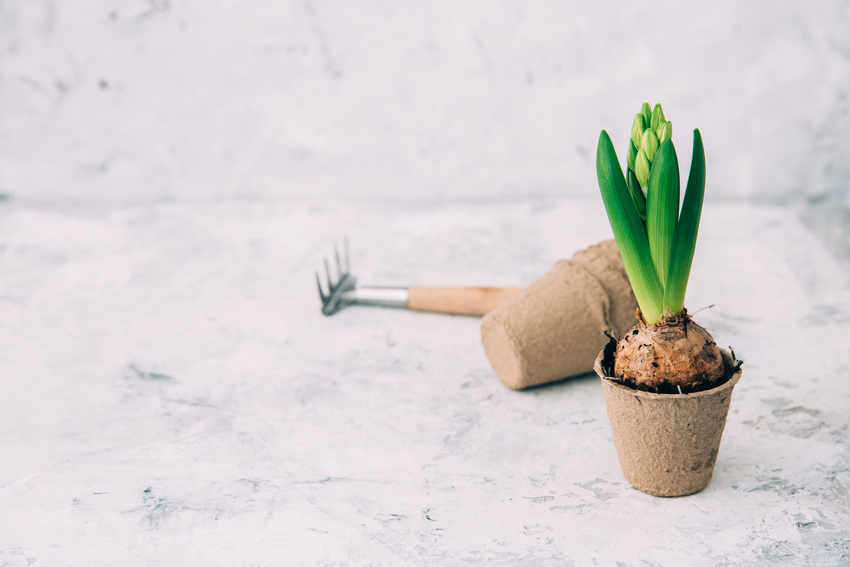
7. give away flower bulbs and pots

Simply buy a flower bulb, customize the pot and you're done. Particularly impressive: tulips and amaryllis.


8. build birdhouses and give bird food as gifts

Bird feeders are available in different versions. You can hang fat balls in flower pots you have designed yourself. You can make fancy, cat-proof bird houses from old Tetra containers that you paint nicely.


9. folding the Fröbel star

These stars look really impressive. There are lots of videos on the internet that explain step by step how to do it. Once you've got the hang of it, you won't want to stop!


This YouTube content can only be loaded if you accept the privacy policy of Google LLC.

To the data protection settings "


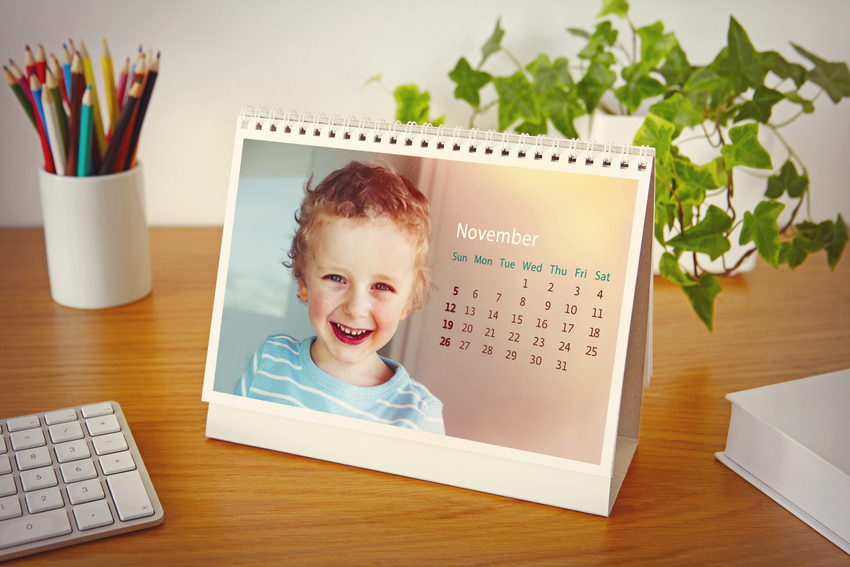
10th photo calendar

Print out the 12 best photos that you took with your favorite person this year or that you think will be well received and stick them into a finished calendar. Of course you can also make collages.


11. preserving jam

Making jam is not difficult at all. What's more, homemade jam tastes better than jam from the supermarket. Three things are important:

  1. Sugar (or the preservative contained in the gelling sugar from a ratio of 2:1)
  2.  Cooking fruit
  3. Fill boiling hot into preserving jars

To make this a success, we have summarized some tips for preserving:

Make sure the fruit is fresh and fully ripe. Only wash fruit briefly before chopping so that it does not lose its flavor. Make sure you use jars that are airtight and completely clean.

Example recipe: 1.2 kg strawberries, 3 tbsp lemon juice, 1 vanilla pod, 500 g preserving sugar (2:1)

Prepare 7 200 ml jam jars. Wash, clean and finely dice the strawberries. Place the strawberries in a large pan with the lemon juice. Cut the vanilla pod lengthwise and scrape out the seeds with a knife. Add the scraped out pod and pulp to the strawberries. Stir the preserving sugar into the fruit and bring to the boil. Bring everything to the boil, stirring constantly, and cook for at least 3 minutes. Carefully remove the vanilla pod, puree the jam, pour into the prepared jars and seal immediately.




The gift tips for Christmas or other special days come from pme social pedagogue and trainer Jürgen Griesbeck and his daughters. They have already made, baked or cooked many of the ideas themselves and given them as gifts to good friends and family.