The BEM Process and Its Benefits: Explained Simply
When employees are absent for longer periods or more frequently, Workplace Integration Management (BEM) comes into play—and in Germany, it is actually required by law. The goal: to get people back to work quickly and permanently and prevent further absences. This is beneficial for companies: BEM provides legal certainty, promotes healthy working conditions, and strengthens the team. In short: a win-win solution for employees and employers.
Read more in this article:
- What is Workplace Inclusion Management (BEM)?
- When is BEM required by law?
- Objectives of the BEM
- Benefits of the BEM at a Glance
- Step-by-Step BEM Process
- Common Challenges and Mistakes in the BEM Process
- How often is BEM used?
- What does "systemically oriented BEM" mean?
- FAQ - Frequently Asked Questions About BEM
What is Workplace Inclusion Management (BEM)?
The BEM (Workplace Integration Management) is a legally mandated process under Section 167(2) of SGB IX.
It is designed to support employees in their recovery and return to work following a prolonged illness. Individual solutions are developed in collaboration with the BEM advisor.
- Who is this for? For all employees, regardless of health status or position
- Why? To protect jobs and help people stay healthy and able to work
When is BEM required by law?
BEM must be offered as soon as employees are absent due to illness for a total of more than six weeks within a 12-month period—whether consecutively or intermittently.
Objectives of the BEM
- Overcoming an inability to work
- Prevent further illnesses
- Secure your job
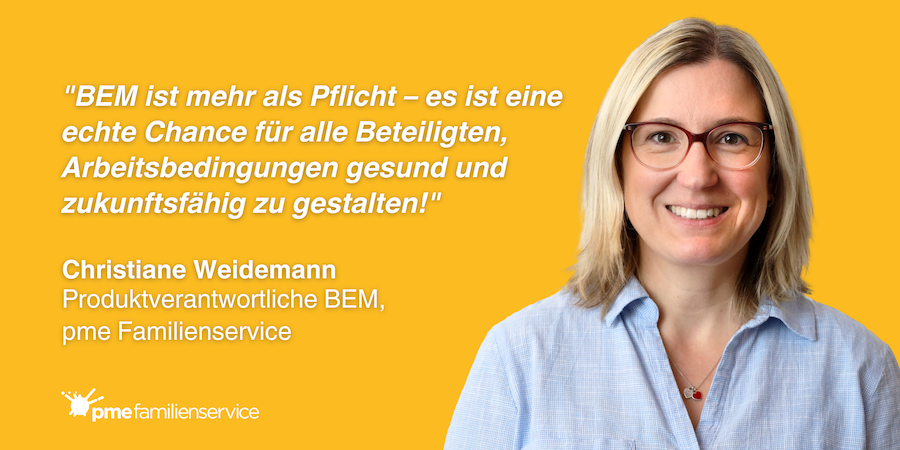
Benefits of the BEM at a Glance
For employees:
- Personalized support and guidance
- Structured Reintegration into the Workplace
- Promoting healthy working conditions in the long term
- An open approach to health and illness
For businesses:
- Compliance with legal requirements and legal certainty
- Reduction in sick leave and absenteeism costs
- Strengthening leadership and interpersonal skills
- Enhanced reputation and a positive corporate culture
Step-by-Step BEM Process
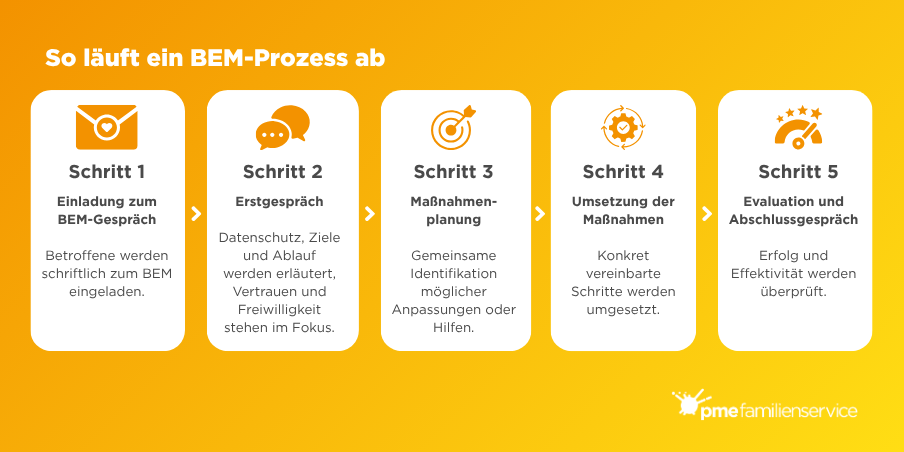
Examples of possible BEM measures
- Adjustment of working hours or workload
- Ergonomic workplace design
- Gradual reintegration
- Individual continuing education or training programs
- External support (e.g., social services)
Common Challenges and Mistakes in the BEM Process
- Lack of support from management
- Inadequately trained internal BEM coordinators
- Negative communication (“BEM = the final step before termination”)
- A mere formality instead of real help
- Lack of objectivity: A BEM conducted by a direct supervisor can breed mistrust; a better option is an external consultant or a trusted individual within the company
Tip: An open corporate culture, clear responsibilities, and sufficient resources are crucial to the success of the BEM.
How often is BEM used?
- Only about 50% of the employees invited accept a BEM offer.
- Nearly half of eligible employees are not offered a BEM (Source: BIBB-BAuA Survey of the Working Population).
This shows that there is still a great deal of potential for companies and employees.
What does “systemically oriented BEM” mean?
A systemically oriented workplace integration management program operates at four key levels of work ability:
- Medical aspect: The focus here is on maintaining physical performance. Medical support and targeted measures help identify and address health limitations at an early stage.
- Psychological level: This involves employee motivation and self-efficacy. Individual counseling and supportive conversations help build confidence in one’s own strengths and foster a willingness to participate.
- Social level: Support is provided by professional counselors, immediate supervisors, and coworkers. A good team and a supportive environment are crucial for successful reintegration.
- Organizational level: The company develops targeted support structures and designs work requirements and conditions to promote good health.
Advantage: A properly organized BEM process makes it possible to effectively combine early detection and rehabilitation—especially when support from within and outside the company is arranged at an early stage in cases of repeated work disability.
In addition, lessons learned from the BEM can be used to prevent chronic illnesses and maintain employees’ ability to work over the long term.
FAQ – Frequently Asked Questions About BEM
Who is eligible for a BEM?
All employees who are unable to work for more than six weeks within a twelve-month period. The nature of the illness is irrelevant.
Is BEM mandatory?
For employers: yes. For employees: no, participation is voluntary.
Who participates in BEM meetings?
The individual concerned and the BEM counselor. The individual concerned decides whether, for example, a manager, a member of the works council, a representative for employees with severe disabilities, or external parties may be consulted.
How is data protection ensured?
All information from the BEM process is treated confidentially and will only be shared with the employee’s consent. The data is subject to data protection laws and is stored securely.
What are the potential consequences of not implementing a BEM?
Without a BEM, companies risk legal repercussions (e.g., in unfair dismissal lawsuits) and higher absenteeism rates.
What rights and obligations do employees have under the BEM?
Employees have the right to accept or decline the offer. They are entitled to confidentiality. They are also required to actively participate in finding potential solutions if they accept the offer.
Can the BEM also be used for mental health conditions?
Yes, the BEM applies regardless of the type of illness, including mental health conditions

.jpg/2033a6a6-5dfd-394b-8212-af4bd295bb4c/2033a6a6-5dfd-394b-8212-af4bd295bb4c?imageThumbnail=2)