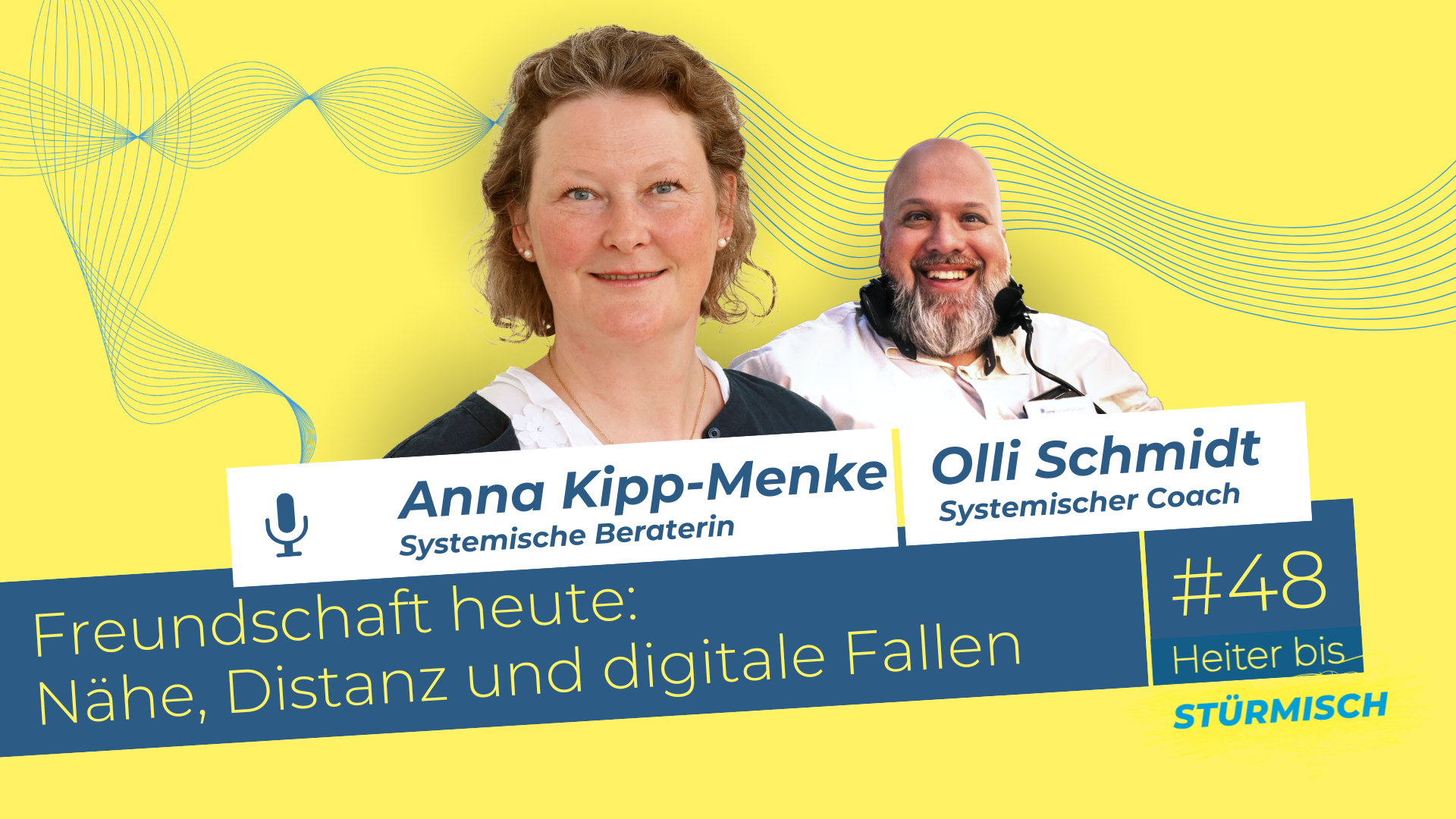


Episode 48: What Makes Friendships Strong?
Strong friendships enhance our well-being. However, new life stages—such as having children, pressure to perform, or constant comparisons on social media—can change friendships or put them to the test. What is the secret to long-lasting friendships, and how can we resolve conflicts and grow together with our friends?
How do friendships form? What role does technology play? When do they support us, and when do they drift apart? Anna Kipp-Menke is a systemic coach at pme Familienservice explains how friendships boost our resilience, how to give constructive feedback, and why it’s essential to discuss differing expectations.
Anna offers practical advice: How can we have meaningful conversations with our friends? What words offer comfort, and when is listening more important than finding a solution?
This letscast.fm content can only be loaded if you accept the privacy policy of letscast.fm.
To the data protection settings "That's what this episode is about:
- Change Through Technology: Opportunities and Vulnerabilities of Digital Connections
- How Friendships Form: Mere Exposure, Shared Interests, and Random Acts of Kindness
- Friendship Across Life Stages: Childhood, Adolescence, Young Adulthood, Family Life, Old Age
- Why Friends Help Protect Our Well-Being (Resilience, PERMA Model)
- Criticism, Feedback, and the Johari Window: Identifying Blind Spots and Growing Together
- Expectations and Needs: Closeness vs. Distance and How to Address Them
- Nurturing Friendships: Rituals, Openness, Forgiveness, and Small Gestures as "Fertilizer"
Excerpt from the podcast interview:
Oliver: I’m joined by Anna Kipp-Menke from pme Familienservice Stuttgart. Anna, do you have a best friend?
Anna: That’s not an easy question to answer. “Best friend” depends on what stage of life you’re in. It means something different to teenagers than it does to middle-aged people. It depends on what I need at the moment.
Oliver: So friendships are often context-dependent—friends from soccer, work friends, personal friends.
Anna: Exactly. The nature of the relationship determines what we can talk about. Some friendships are professional, while others are very personal.
Oliver: How have friendships changed?
Anna: In the past, friendships often formed by chance, for example through school. Today, we have far more choices and digital options. That’s an advantage—we can stay in touch across great distances—but it also makes friendships more fragile.
In the past, long-lasting friendships were often characterized by forgiveness; today, there are more options and less commitment.
Oliver: Speaking of expectations shaped by technology—read receipts, quick replies.
Anna: Yes. Friendship also means support and validation: the feeling that you’re okay just the way you are. Friends reflect who we are, offer encouragement, but they’re also allowed to offer criticism. Kindness and trust are essential.
Oliver: How does that change as you go through different stages of life?
Anna: During early childhood, children learn social skills through play. During adolescence, friendships become central to the process of identity formation: Who am I? What are my values? In young adulthood, social networks and self-actualization play a role.
During the stages of family life and career, it becomes more difficult to maintain friendships—even though social support is particularly protective during these times. In later life, friendships become more important again as losses increase.
Oliver: What makes friendships strong?
Anna: Shared experiences and crises that you’ve weathered together create depth. Differences in needs—such as a desire for closeness versus a need for distance— should also be discussed openly. When expectations go unspoken, disappointment ensues.
Oliver: How do friendships form?
Anna: One factor is the mere-exposure effect: the more often we see someone, the more likely we are to develop a liking for them, provided the first impression isn’t negative. Openness, friendliness without expecting anything in return (random acts of kindness), and shared interests also play a role. Personality traits such as extraversion influence how easily we can strike up a conversation.
Oliver: And how do friendships affect our well-being?
Anna: Social support reduces stress and is a powerful protective factor. Long-term studies show that strong social connections are essential for a fulfilling life. This is also confirmed by the PERMA model—relationships are key to well-being.
Oliver: How important is feedback in friendships?
Anna: Very important. The Johari Window shows that we have blind spots— aspects that others notice but remain hidden from us. Friends can offer constructive feedback: “You seem to be acting this way right now.” “I” messages are more helpful than accusations because they open the door to dialogue.
Oliver: What if expectations differ?
Anna: Then it’s worth discussing expectations openly. Many conflicts arise from unspoken assumptions. Openness, understanding, and the occasional act of forgiveness are important.
Oliver: Finally, what does a friendship actually need?
Anna: Kindness, openness, listening, understanding, a willingness to give feedback, little rituals, and shared experiences. Friendships are like little plants: they need some sun, water, and a little fertilizer now and then— and that can look very different depending on the person.
Cheerful to stormy - the everyday podcast with Olli Schmidt
Welcome to "Sunny to Stormy" – the everyday podcast. From the heights of joy to the depths of despair: life has its ups and downs. That’s exactly what we’re all about: the everyday crises, such as arguments with your partner, parenting issues, work-related stress, uncertainties, and anxiety. We talk to experts and provide you with practical tips to help you better cope with crises and challenges.
You can listen to our podcast on all major podcast platforms (Spotify, Apple Music, Audible, etc.)! Questions, suggestions, feedback, or requests? Feel free to email us at:familienservice


.png/d52d81a4-5c52-c715-72f7-cc695251ddd9/d52d81a4-5c52-c715-72f7-cc695251ddd9?imageThumbnail=2)