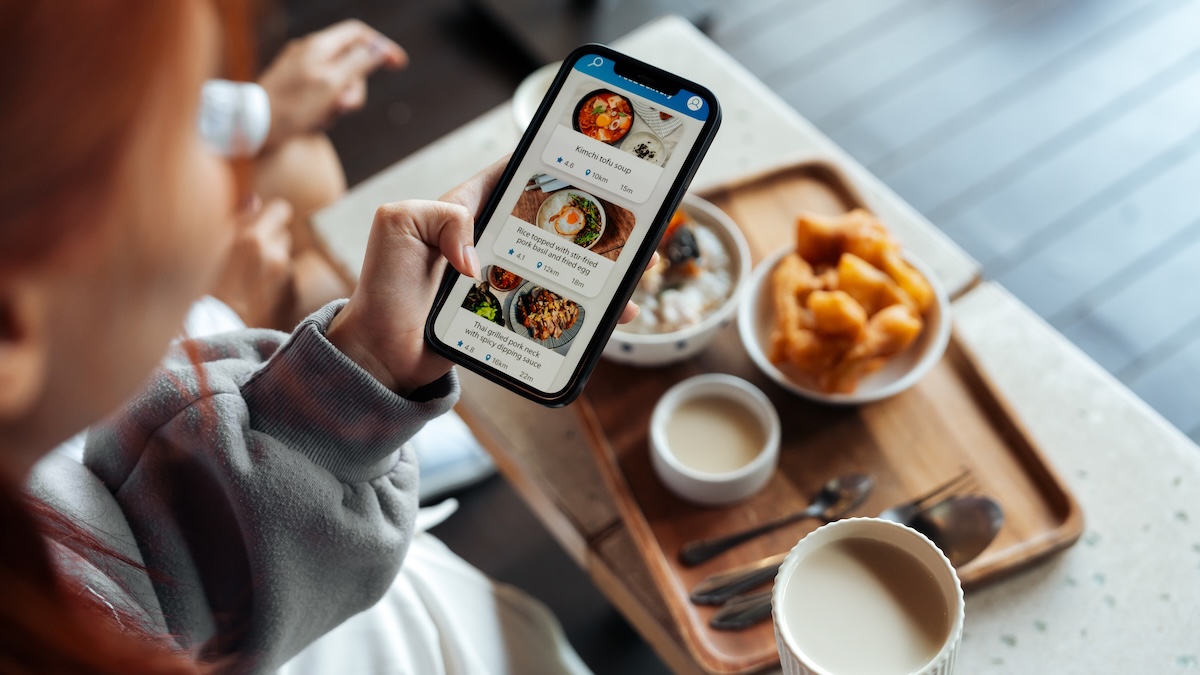


Eating Healthier with AI: These Apps Can Help You in Your Daily Life
Eating healthy isn't always easy in everyday life. Between work, family, and time constraints, there's little room for proper meal planning. This is exactly where artificial intelligence can help: It suggests recipes, creates shopping lists, estimates nutritional values, and helps you identify patterns in your eating habits.
Digital tools range from smartphone apps and recipe and meal-planning services to prescription-eligible digital health applications, known as DiGAs. In this article, you’ll learn which digital tools are truly helpful in everyday life and when professional advice remains the better choice. Text: Kirsten Schreiber (dietitian), Editor: Christin Müller
Read more in this article:
- What exactly can AI do to help with your diet?
- 7 Ways AI Can Make Your Diet Easier
- When is a lifestyle app enough—and when is medical support necessary?
- DiGAs (prescribable digital health applications)
- Here's What to Look for in AI-Powered Nutrition Apps
- Use this quick checklist to find the right app
- Conclusion
- FAQ
What exactly can AI do to help with your diet?
Artificial intelligence processes large amounts of data and identifies patterns within it. In the case of nutrition apps, this data might include, for example, information about your meals, photos of food, activity data, or measurements.
Examples:
- A recipe tailored to your preferences
- a shopping list for the week
- an estimate of calories and nutrients
- an indication of recurring eating habits
It's important to note that AI provides only probabilities and recommendations, not infallible answers. The better the data and the clearer the goal, the more helpful the result can be.
Below, we recommend various nutrition apps. Not every digital nutrition app actually uses artificial intelligence. Some apps, for example, rely on food databases. We can specifically speak of AI when an app, for example, recognizes content, generates personalized recommendations, or analyzes patterns in large amounts of data.
7 Ways AI Can Make Your Diet Easier
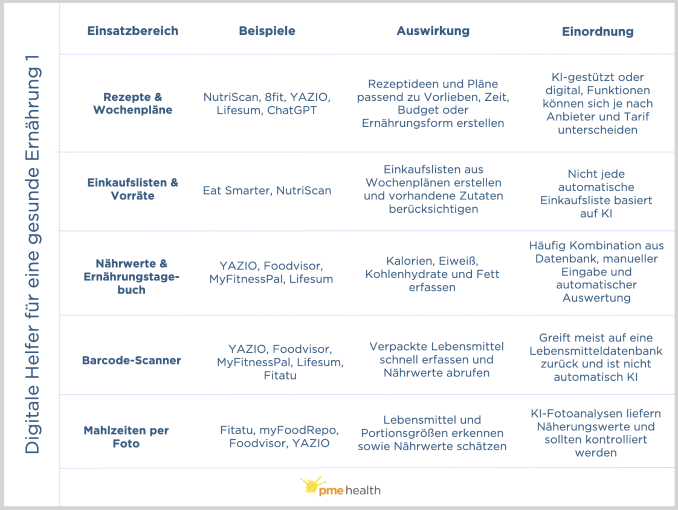
1. Use AI to find recipes and weekly meal plans that suit your needs
Would you like to eat a more varied diet, are you short on time, or do you not know what to do with the ingredients in your fridge? AI-powered apps and chatbots can use this information to generate recipe ideas and flexible, goal-oriented weekly meal plans.
Such plans are especially useful when they are transparent and can be adjusted at any time. A recommendation that cannot be followed or integrated into daily life is of little use. Services like NutriScan tailor plans to regional eating habits.
For example, you can specify,
- which foods you like or can't tolerate,
- how much time you have to cook,
- how many people will be joining us for dinner,
- what your budget is,
- whether you want to cook vegetarian, vegan, or with seasonal ingredients.

The right tool can make meal planning much easier.
The advantage: Your information helps generate concrete ideas more quickly. Be sure to check the recipes anyway—especially if you have allergies or food intolerances, or if you follow a medically prescribed diet.
2. Shop Faster and More Targeted with AI
Many platforms automatically generate shopping lists and weekly meal plans (e.g., Eat Smarter, Nutriscan). This saves time and can help you shop less impulsively—and thus often make healthier choices. It’s especially convenient when you can adjust portion sizes and have the app take into account the ingredients you already have on hand. That way, less food ends up going to waste in the fridge.
3. Keep track of nutritional values more easily
Some apps estimate nutritional values in real time or use barcode scanners for quick entry (e.g., YAZIO, MyFitnessPal, Lifesum). This allows you to get a quick overview of calories, protein, carbohydrates, and fat.
However, this information is not always accurate. Serving sizes are estimates, databases may be out of date, and products from different brands may vary. Therefore, use these values as a general guide and compare key information with what is listed on the packaging.
4. Tracking meals with photos—how reliable is that?
Apps with image recognition (e.g., Foodvisor, Fitatu, myFoodRepo) can save a lot of time in everyday life. They’re useful as a quick filter for categorizing meals, but they can also provide inaccurate nutritional estimates—especially for complex dishes, when there’s perspective distortion, or when portion sizes are uncertain.
They often work better with simple meals than with complex dishes. It’s difficult to reliably assess a soup, a casserole, or a sandwich based on a single photo. Oil, sauces, and the actual portion size are also usually not clearly visible.
For this reason , nutrition professionals should be involved in the development and evaluation of image-based systems in order to reduce sources of error.
5. Link health data to nutrition in a meaningful way
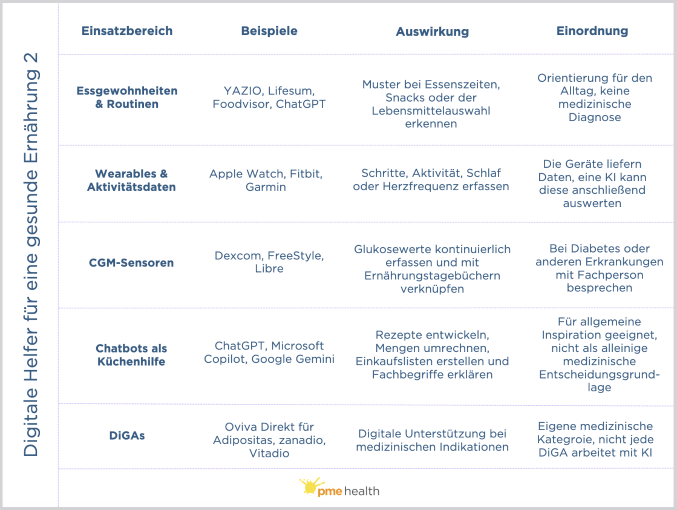
Fitness watches and other wearables (Apple Watch, Fitbit, Garmin) provide activity and vital sign data, while CGM (Continuous Glucose Monitoring) sensors (e.g., Dexcom) continuously monitor glucose levels.
AI reaches its full potential with CGM data: The sensors generate enormous amounts of data, which AI can link to food diaries to identify temporal patterns (e.g., recurring glucose spikes after certain meals).
This provides insights that would be difficult to discern manually. However, such analyses should always be conducted in collaboration with experts.
6. Using Chatbots as Digital Kitchen Assistants
Generative AI can help you, for example,
- Developing recipes using ingredients you already have,
- Converting quantities for multiple people,
- to make a shopping list,
- Explaining technical terms in a way that's easy to understand
- or to gather ideas for quick snacks during breaks.
This is helpful for general inspiration. However, if you have health issues, medical conditions, eating disorders, are pregnant, or are following a special diet, you should not rely solely on a chatbot.
7. Analyze Eating Habits and Improve Routines
AI can identify recurring patterns in your eating habits, such as regular snacking, irregular meal times, or an unbalanced diet. Apps can use this information to provide guidance and practical suggestions for everyday life.
These tips can help you become more mindful of your diet and gradually change your habits. However, they are meant as a guide and do not constitute a medical diagnosis.
When is a lifestyle app enough—and when is medical support necessary?
Not every digital nutrition tool has been medically tested. Many apps are primarily designed to help you with routines, motivation, and tracking. That can be more than enough for everyday life.
In the case of an illness or a specific treatment goal, proven medical applications and professional advice are more important. Digital health applications—or DiGAs for short—are subject to specific requirements and may be prescribed by a doctor under certain conditions.
The key question, then, is: Do you want to better organize your daily diet, or are you trying to address a health issue? The solution that’s right for you depends on the answer.
DiGAs (prescribable digital health applications)
DiGAs are medically validated applications subject to stricter evidence-based and data protection requirements. They can be prescribed by a doctor and reimbursed by public health insurance plans. Examples in the field of nutrition include Oviva Direkt for obesity, zanadio, and Vitadio (e.g., for type 2 diabetes).
DiGAs are not lifestyle apps. They are subject to legal requirements and are intended to support therapeutic goals. Check the specific indication and listing in the DiGA directory at the BfArM before considering a prescription or use.
Here's What to Look for in AI-Powered Nutrition Apps
Data protection
Check what data the app collects, for what purpose it is processed, who has access to it, and how long it is stored. Also, make sure the app has a transparent privacy policy, uses encrypted data transmission, employs secure authentication methods, and allows you to delete your data. Highly sensitive health data should be stored locally or on secure servers in Germany or within your organization.
Data Quality
Compare automatically generated information (such as nutritional values) with the information on the packaging on a random basis. If the values consistently differ significantly, switch to a different app.
Personalization
Make sure to check whether the recommendations can be adapted to your specific circumstances. For medical questions, seek professional advice.
Suitability for everyday use
Try it out briefly. A tool is only helpful if you use it regularly.
Security & Support
Make sure to check for regular updates, accessible support, and (for medical applications) official approval or reimbursement eligibility.
Before you choose an AI app to help with your diet, ask yourself:
- What do I want to achieve? More structure, new recipes, weight loss, or support for a medical condition?
- How accurate do the results need to be? The requirements for inspiration are different from those for therapy.
- How sensitive is my data? The more personal the information, the more important data protection and transparency become.
- Can I understand the recommendations? Good suggestions should be easy to understand and adaptable.
- Will this app fit into my daily life? Only a tool that you use regularly can provide you with long-term support.
Conclusion: AI supports you—but you have to make the decision yourself
AI-powered apps are useful in everyday life. They save time, provide personalized recommendations, and help establish routines. However, nutritional estimates based on photos and inconsistent data sources can be unreliable. Therefore, results should be evaluated critically, and professionals should be consulted when necessary.
Therefore, use AI as a tool, not as the sole basis for decision-making.
FAQ: AI and Nutrition
What Can Artificial Intelligence Do for Nutrition?
AI can come up with recipe ideas, create weekly meal plans, put together shopping lists, and analyze eating habits. Depending on the application, it can also recognize foods in photos or estimate nutritional values.
However, the results are recommendations and should be evaluated critically, especially when it comes to medical issues.
Are all nutrition apps automatically AI apps?
No. Many apps primarily rely on food databases, barcode scanners, or fixed rules. An app typically uses AI when, for example, it analyzes photos, generates personalized recommendations, or identifies recurring patterns in large datasets.
Can AI create a personalized meal plan?
Yes. Many AI-powered apps can generate suggestions based on your preferences, food intolerances, cooking time, household size, or dietary preferences.
Be sure to check the recommendations for yourself, especially if you have allergies, food intolerances, are pregnant, or follow a medically necessary diet.
How reliable is the nutritional information provided by nutrition apps?
Nutritional information from apps is often approximate. This can be due to inaccurate serving sizes, incomplete food databases, or differences between brand-name products.
These figures can serve as a rough guide; you should compare important values with the information on the packaging or with reliable technical data.
How reliable is meal recognition based on photos?
Image recognition usually works better for simple meals than for complex dishes. Oil, sauces, ingredients hidden inside a dish, and the actual portion size are often not clearly visible in a photo. D
The results should therefore be considered estimates rather than exact nutritional analyses.
Can AI analyze my eating habits?
Yes. If you regularly track your meals, mealtimes, or snacks, an app can help you identify recurring patterns.
For example, it may indicate irregular meals or frequent snacking. However, this is not a substitute for a medical or psychological diagnosis.
Which app is best for eating healthier?
That depends on your goal. Different apps are best suited for recipe ideas and weekly meal plans than for keeping a food diary, tracking nutritional values, or managing a medical condition.
Look for recommendations that make sense, good customization options, data protection, and a user experience that fits into your daily routine.
What is the difference between a lifestyle app and a DiGA?
A lifestyle app usually helps with routines, motivation, tracking, or general meal planning.
A DiGA is a digital health application that has been evaluated as a medical device and included in the BfArM's DiGA directory.
If the indication is appropriate, it can be prescribed by a doctor under certain conditions and covered by public health insurance.
Can AI provide dietary recommendations for people with diabetes?
An AI can analyze data from food diaries or, if applicable, from connected sensors, and identify patterns. However, it should not use this information to make independent treatment decisions.
For diabetes and other medical conditions, dietary recommendations should always be discussed with your doctor or a qualified nutritionist.
Can I use chatbots if I have allergies or food intolerances?
Chatbots can provide initial recipe ideas, but they are not a reliable safety check. If you have allergies, you must carefully check ingredient lists, potential traces, and cross-contamination.
When in doubt, seeking professional advice is the better choice.
What should I keep in mind regarding data protection?
Check what health and nutrition data the app stores, what it is used for, and whether it is shared with third parties.
Also, make sure there are secure login procedures, encryption, transparent data retention periods, and a clear privacy policy.
Can an AI-powered nutrition app replace a nutrition consultation?
No. An app can help with planning, documentation, and guidance. However, it is no substitute for personalized advice, especially when it comes to medical conditions, eating disorders, pregnancy, allergies, or medically necessary dietary restrictions.
Can AI guarantee a healthy diet?
No. AI can make suggestions and simplify routines, but it cannot guarantee a healthy diet. Whether a recommendation is actually appropriate depends on the data entered, the quality of the app, and the individual’s personal circumstances.