

Doc Esser: "The internet recognizes symptoms, not the person"
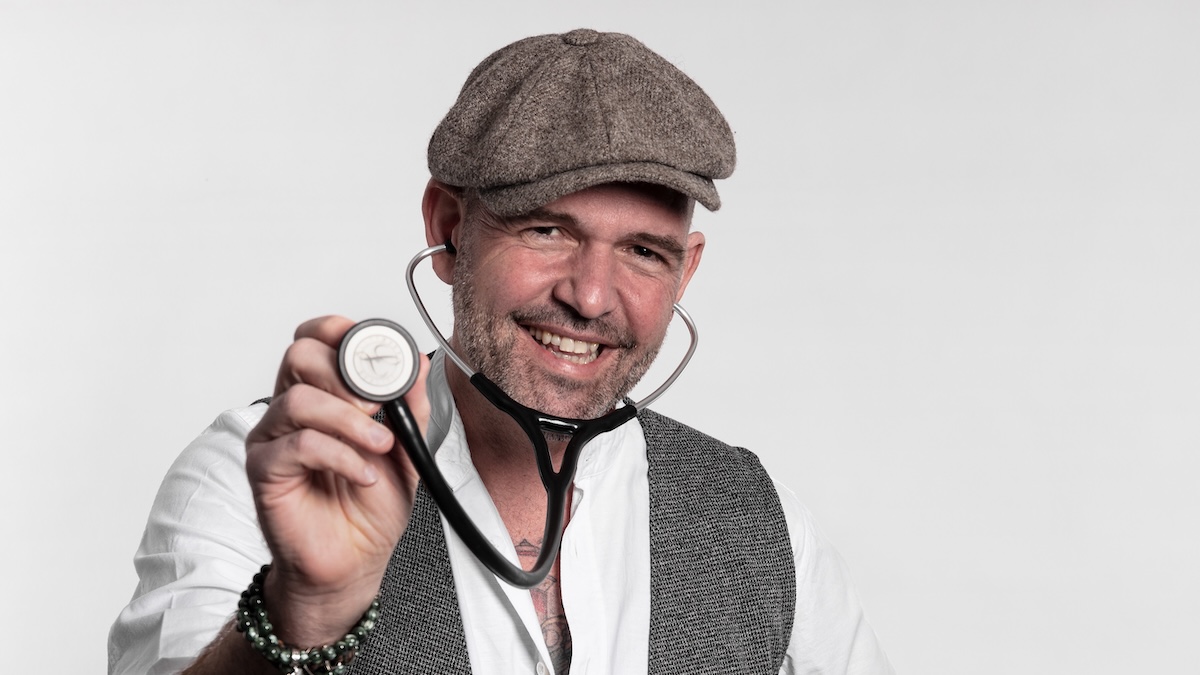
Dr. Heinz-Wilhelm Esser, better known to most people as Doc Esser, is a specialist in cardiology, pulmonology, emergency medicine, and critical care medicine. He is also a host and musician. He speaks in a way that resonates with people: on WDR, on the podcast “Frag dich fit,” and on stage with his band. In doing so, he succeeds in explaining complex medical topics in a way that is both understandable and entertaining.
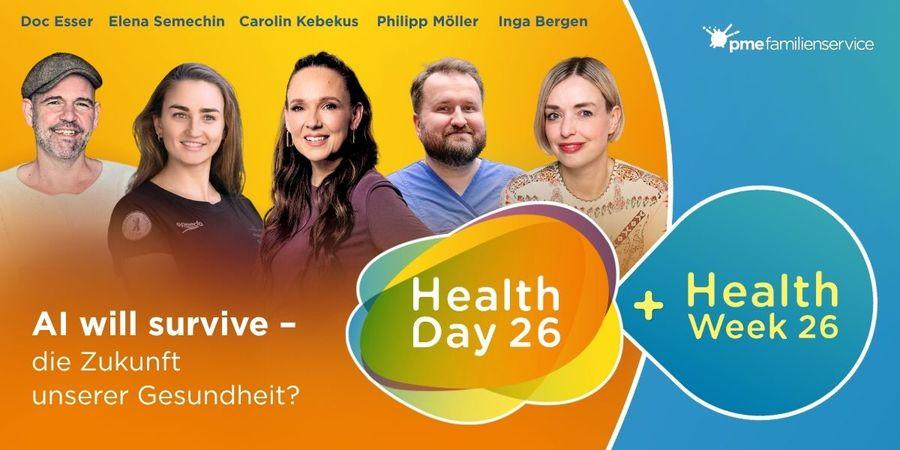
In 2026, Doc Esser will be a speaker at pme’s Health Day 2026 Familienservice on October 8—our digital health day for employees of our partner organizations. We spoke with him in advance about why small habits are more effective than strict bans, what causes stress, and where ChatGPT and similar tools make sense—and where they don’t.
Many people want to live healthy lives, and public health literacy has probably never been higher than it is today. So why is it still so difficult to do so in everyday life?
Doc Esser: I don't think we're lacking in knowledge at all. Sometimes we just lack the daily routine. We all know that exercise is healthy, that vegetables are better than fries, and that eight hours of sleep would be a good idea.
The problem is: Our brain loves convenience. It wants to conserve energy and rewards things that feel good right away—the chocolate today just tastes better than the promise of a healthier body in ten years.
That's why health shouldn't be all about restrictions. No one can keep denying themselves everything in the long run. Small habits are much more important:
- Go for a ten-minute walk
- Stairs instead of the elevator
- One More Apple a Day
Good health rarely comes from grand heroic deeds—but rather from many small decisions.
Many people Google symptoms or ask ChatGPT. When can this be helpful—and when does it become risky?
I generally think it's a good thing when people take an interest in their health. The internet and AI are incredibly good at explaining things. They can help you understand a doctor's note or prepare for a doctor's appointment.
It becomes problematic when Google or ChatGPT are expected to replace a doctor. The internet only recognizes symptoms—but not the person. Chest pain in a 25-year-old after a weight-training session is different from the same chest pain in a 75-year-old with diabetes.
"That's why I always say: The Internet can be a good translator. But a diagnosis should always be left to experienced professionals." – Doc Esser
How can I tell if health information online is really trustworthy?
I always ask myself three simple questions.
- Who wrote this?
- Is this person trying to give me information—or sell me something?
- And: Are these statements based on scientific findings?
If a website claims that a single powder, a miracle diet, or a dietary supplement can suddenly cure all diseases, that should set off alarm bells.
"Unfortunately, miracles are very rare in medicine. Most of the time, the simplest things are the most effective: exercise, sleep, not smoking, and a healthy diet." – Doc Esser
In your practice, have you noticed that people are getting their information from ChatGPT or social media? And from a medical perspective, is that more of an opportunity or a risk?
Definitely. That happens every day now. And to be honest, I think it’s mostly a good thing.
Patients today often come to their appointments better prepared. They ask more specific questions and grasp the big picture more quickly.
Of course, there are also people who, after spending two hours online, are convinced they have an extremely rare disease. We doctors see this all the time. But overall, I see it more as an opportunity.
"Good medicine thrives on dialogue. A well-informed patient can make better decisions—as long as both sides are willing to talk to each other." – Doc Esser
Our brains are programmed to take dangers very seriously. That's why dramatic headlines stick in our minds much better than reassuring news.
So my advice is this: Not every headline applies to you personally.
And at the same time, listen to your body.
If you experience new symptoms, if your symptoms get worse, or if your gut tells you, “Something isn’t right here,” then see a doctor.
"A gut feeling is no substitute for a diagnosis. But it's often a good reason to take things seriously." – Doc Esser
How much do stress, worries, and emotional strain affect the body? Have you noticed any changes in recent years?
Absolutely. I actually think we've long underestimated the importance of stress.
Stress increases:
- blood pressure
- impairs sleep
- affects our immune system
- and can even contribute to chronic inflammation.
In my practice, I see significantly more people these days whose bodies are reacting to chronic stress:
- Heart palpitations
- Shortness of breath
- Dizziness
- or stomach problems
Often, there is no serious organic disease underlying this; rather, it is a nervous system that has been on high alert for months.
"Our bodies are excellent at coping with stress. But not around the clock." – Doc Esser
Do younger and older people approach health and health information differently?
Yes, absolutely. Younger people often turn to digital sources first. They come in with screenshots, apps, or printouts from ChatGPT. Older people often place greater trust in their family doctor.
But I believe both generations can learn from each other. The younger generation should feel free to regain a little more trust in medical expertise. And the older generation should feel free to remain curious and make use of modern sources of information. Ultimately, it’s not about one or the other, but about working well together.
If you could name just three small things: What really contributes most to your health in everyday life?
1. Exercise:Not a marathon. Just a little bit every day. The body is designed to move.
2. Sleep:Sleep is not wasted time. While we sleep, our bodies repair themselves. Our brains clear out clutter. Our immune systems are at work.
3. Social connections: Many people forget this. People with strong friendships and stable relationships have been shown to live healthier lives and often even longer.
"Health isn't just a matter of the body, but also of how we relate to one another." – Doc Esser
You're pretty active yourself. In addition to your medical practice, you also tour Germany as a musician. How do you keep stress at bay?
I don't think stress is the real problem at all. Stress only becomes a problem when it isn't followed by rest.
For me, music isn't an extra burden—it's a way to unwind. When I'm on stage with my band, I'm not a professor or a doctor. Then I'm just Heinz. I also try to carve out little pockets of time in my daily routine—a walk, some exercise, time with my family, or just putting my phone away for a while.
And I keep reminding myself: Perfection rarely brings happiness. Joy, on the other hand, almost always does.
We offer in-person and digital consulting in organizational development, GBU Psyche, and BEM design and support—supplemented digitally by our Mindance app, which features over 1,000 interactive video and audio sessions, bookable one-on-one coaching sessions, and a 24/7 ExpertLine.
Discover Now: Health Management for Businesses