


Episode 47: Understanding Autism
What does autism mean in everyday life—and how does the diagnostic process actually work? In this podcast episode, Nico shares his personal experiences as someone on the autism spectrum and explains what terms like neurodiversity, masking, and sensory overload mean.
That's what this episode is about:
- Neurodiversity and Neurotypical: An Overview of the Terms
- Common Symptoms and Daily Coping Strategies for Autism
- Masking, Overload, and Coping with Sensory Overload
- Diagnosis: The Pathways and Challenges of Autism Diagnosis
This letscast.fm content can only be loaded if you accept the privacy policy of letscast.fm.
To the data protection settings "Excerpt from the podcast interview with Nico Löffler:
Nico, what exactly is neurodiversity, and what does the term "neurotypical" mean?
Nico Löffler: The umbrella term “neurodiversity” refers to the fact that human brains function differently. There are neurotypical people—that is, the average. And then there are people whose neurology, or the way their brains function, differs somewhat more. These people are called neurodivergent. This includes diagnoses such as autism or, for example, ADHD.
What are the symptoms of autism?
Nico Löffler: Difficulty with change, a need for routine, a need for structure— , for example. It’s important to know that autism can occur with or without cognitive impairments. So you could say this applies to all areas of intelligence.
It’s possible that someone has significant cognitive impairments and struggles as a result. But it’s also possible that someone has average or above-average intelligence and therefore faces fewer challenges in daily life, such as understanding things cognitively. That’s the case for me: I don’t have any cognitive impairments. Nevertheless, I face a lot of difficulties due to autism. These generally always fall into the broad categories of communication, interaction, and repetitive behaviors.
You need to explain that briefly. It's repetitive.
Nico Löffler: Yes, "repetitive" means recurring. It refers to behaviors that are stereotypical— actions that are performed over and over again in the same way. This includes, for example, having daily routines, because they provide a sense of security and are familiar, allowing you to plan your schedule precisely and minimizing your exposure to spontaneous changes.
But it also applies to special interests, for example. These are interests that are very intense and sometimes focus on very specific, niche topics. For me, for instance, it’s Harry Potter, or the universe—I find that totally fascinating, too. I can spend hours engrossed in these things, to the point where I can lose myself in them and maybe even forget about important everyday matters for a while.
Are there any other symptoms that are important to consider when discussing autism?
Nico Löffler: Absolutely. Of course, a major aspect is the social aspect—specifically, when it comes to communicating with other people. For example, when I try to use certain facial expressions and gestures myself, or when I try to recognize them in the person I’m talking to.
And then there’s interaction. That’s the ability to engage in back-and-forth conversations—conversations where people respond to one another. One person says something, the other person responds to it, and then the first person responds to that. These are exactly the kinds of things that people on the autism spectrum find difficult.
Overwhelm, Overload, and Coping Strategies in Everyday Life. What Happens When It All Gets Too Much?
Nico Löffler: For example, when some people on the autism spectrum become so overstimulated that they experience what’s called an “overload.” This is sensory overload, where you become completely overwhelmed by the various environmental stimuli. Maybe people around you are talking really loudly, and then there’s a bright light, and then you catch a whiff of some unpleasant smell, and at some point it’s just too much. Then, under certain circumstances, you might experience what’s called an overload. Your mind basically shuts down, and you feel completely overwhelmed inside.
What helps you in a moment like that?
Nico Löffler: The best thing would be to prevent such an overload. Make sure it doesn’t get to that point in the first place. Seek some space beforehand, perhaps even warn those around you and say, “This or that can quickly lead to me feeling overstimulated or overwhelmed.” I’ll then make myself known and maybe step back. Small aids can also help, like headphones or sunglasses when there are stimuli. Then there’s the concept of “stimming,” which, by the way, also falls under these repetitive behaviors: meaning doing small things that stimulate the senses, but in a positive way.
Angelina Boerger was diagnosed with ADHD as an adult and shares, in a personal and humorous way, what ADHD means in her daily life. She highlights the strengths of neurodivergent thinking— from creative flights of fancy to unconventional solutions—and speaks openly about the downsides.
June 24, 2026, from 6:30 p.m. to 8:00 p.m.
Registration: " Kirmes im Kopf" with Angelina Boerger
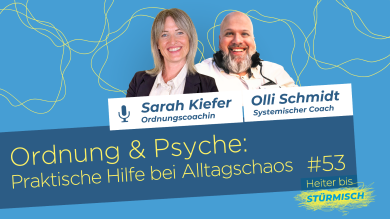
Cheerful to stormy - the everyday podcast with Olli Schmidt
Welcome to "Sunny to Stormy" – the everyday podcast. From the heights of joy to the depths of despair: life has its ups and downs. That’s exactly what we’re all about: the everyday crises, such as arguments with your partner, parenting issues, work-related stress, uncertainties, and anxiety. We talk to experts and provide you with practical tips to help you better cope with crises and challenges.
You can listen to our podcast on all major podcast platforms (Spotify, Apple Music, Audible, etc.)! Questions, suggestions, feedback, or requests? Feel free to email us at: familienservice




.jpg/2efeaa7b-f1ec-1ca9-9c55-3f523106067d/2efeaa7b-f1ec-1ca9-9c55-3f523106067d?imageThumbnail=2)
